Will Senate Pass 2026 Border Security Act? Cloture Obstacles
Advertisements
The question Will the Senate Pass the 2026 Bipartisan Border Security Act? starts from a premise that is not supported by the current Senate record. As of September 24, 2026, the Senate's legislative and cloture records do not identify a pending measure with that exact title.
The closest historical reference is the Border Act of 2024, S.4361, which dealt with emergency border-security and fentanyl funding and failed to obtain enough support to advance in the Senate in May 2024.
In 2026, the Senate instead considered and passed a separate measure known as the Secure America Act, S.2, using the budget reconciliation process. That distinction is essential because the procedural rules governing S.2 were different from the ordinary 60-vote cloture framework described in the original article.
What Happened to the Earlier Bipartisan Border Proposal?
The legislation most closely resembling the article's description was the 2024 Border Act, not a new 2026 bill carrying the same bipartisan framework.
S.4361 was formally titled a bill making emergency supplemental appropriations for border security and combating fentanyl for fiscal year 2024 and other purposes.
On May 23, 2024, the Senate considered cloture on the motion to proceed to that measure, but the vote failed 43–50, leaving it short of the three-fifths threshold required for ordinary legislation.
The 2024 Cloture Vote
The Senate record shows that 43 senators voted to invoke cloture, 50 voted against it and seven did not vote.
Because cloture was not invoked, the Senate did not move forward with consideration of S.4361 through that procedural route.
That vote is a documented historical event and should not be presented as a pending 2026 vote or as evidence that an identically named measure is currently awaiting action.
What Is the Secure America Act of 2026?
The major Senate border and immigration enforcement measure in 2026 was S.2, known as the Secure America Act.
The Senate Judiciary Committee described portions of the legislation as providing funding for Customs and Border Protection, Immigration and Customs Enforcement and other Department of Homeland Security enforcement activities through fiscal year 2029.
The measure ultimately passed the Senate on June 5, 2026, by a vote of 52–47. The official Senate roll-call record identifies S.2 as legislation considered under the budget reconciliation process.
Why S.2 Was Procedurally Different
Budget reconciliation legislation operates under special Senate procedures that differ from ordinary legislation subject to the traditional filibuster.
The Senate's June 2026 record shows S.2 proceeding as reconciliation legislation pursuant to the fiscal year 2026 budget resolution rather than through a conventional 60-vote cloture pathway.
This means the central premise of four separate cloture obstacles preventing passage of a 2026 bipartisan border bill does not accurately describe the legislation that the Senate actually considered and passed in June.

How Cloture Normally Works in the Senate
For ordinary legislation, Senate rules generally require three-fifths of senators duly chosen and sworn to invoke cloture and end debate.
In a fully seated 100-member Senate, that normally means 60 votes, after which the chamber can move toward final consideration under the applicable post-cloture rules.
The 60-vote requirement is therefore highly relevant to many bills, but it should not be presented as applying identically to reconciliation legislation or nominations.
Cloture Is Not the Same as Final Passage
A cloture vote determines whether the Senate will limit further debate on a pending legislative matter.
Final passage is a separate question and, for most ordinary legislation, generally requires only a simple majority once the Senate reaches that vote.
A bill can therefore have majority support and still fail to advance if supporters cannot first obtain the votes necessary to end debate.
Obstacle 1: Reaching the 60-Vote Threshold on Ordinary Legislation
For conventional border legislation outside reconciliation, the most concrete procedural obstacle is simply assembling the three-fifths coalition required to invoke cloture.
The 2024 Border Act illustrates that problem directly: its cloture vote received 43 votes in favor, well below the ordinary threshold.
That result demonstrates a numerical obstacle documented in the Senate record without requiring assumptions about individual senators' motives.
Why Vote Counts Matter More Than Labels
Calling a proposal bipartisan does not establish that it has enough votes to advance through the Senate.
A bill may have sponsors or supporters from both parties while still lacking the broader coalition required for cloture.
For readers following future border bills, public commitments and actual roll-call votes provide firmer evidence than broad descriptions of bipartisan momentum.
Obstacle 2: The Motion to Proceed Can Be Blocked
Cloture can become necessary before senators even begin full consideration of a bill.
The May 2024 vote on S.4361 was specifically a cloture vote on the motion to proceed, meaning senators were deciding whether to end debate on taking up the measure rather than voting on final passage itself.
This procedural distinction matters because legislation can stall before the Senate reaches amendments or a final up-or-down vote.
What Readers Should Look For
When a new border proposal is introduced, readers should check whether Senate leadership has filed cloture on the bill itself, on a motion to proceed or on a particular amendment.
The Senate publishes current cloture motions and their outcomes, allowing the procedural status to be verified directly.
As of September 23, 2026, the Senate's current 119th Congress cloture list did not show a pending measure titled the “2026 Bipartisan Border Security Act.”
Obstacle 3: Amendments and Budget Rules Can Change the Path
Even when legislation reaches the floor, amendments and procedural rules can determine which provisions survive.
During consideration of S.2 in June 2026, senators voted on numerous amendments and motions to waive budgetary rules, several of which required three-fifths support even though final passage of the reconciliation bill itself operated under majority-vote procedures.
This illustrates why saying a bill “needs 60 votes” can be incomplete: different stages or particular amendments can face different voting requirements.
Reconciliation Has Its Own Limits
Budget reconciliation can allow qualifying fiscal legislation to move without the ordinary legislative filibuster.
That does not mean every immigration or border-policy provision can automatically be placed into a reconciliation bill.
Senators still face budgetary rules governing what provisions and amendments are permissible, and Senate votes in June 2026 show multiple attempts to waive those rules failing to reach the required threshold.
Obstacle 4: House and Senate Agreement Is Still Required
Senate passage does not by itself send a bill to the president unless the House has also approved identical legislative text.
After the Senate passed the Secure America Act on June 5, supporters described the measure as moving to the House for further consideration.
This constitutional legislative requirement is a more concrete obstacle to enactment than speculation about whether senators are motivated primarily by elections, donors or ideological pressure.
Different Chambers Can Produce Different Texts
If the House and Senate approve different versions of legislation, those differences ordinarily must be resolved before a measure can be presented to the president.
That can occur through further amendment exchanges or other congressional procedures.
Readers tracking border legislation should therefore distinguish Senate passage from final congressional enactment.
Partisan Disagreement Remains Relevant, but Motives Require Attribution
Immigration and border policy remained sharply contested in Congress during both the 2024 and 2026 debates.
Republican senators supporting the Secure America Act described it as necessary to strengthen immigration enforcement and fund federal law-enforcement agencies, while Democratic senators offered amendments addressing issues including DACA and oversight during Senate consideration.
Those documented policy disagreements are more reliable to report than asserting as fact that senators voted primarily because of donors, campaign pressure or political survival.
Campaign Considerations Are Difficult to Prove
The original article attributed Senate behaviour to election-year positioning and fears of political attacks.
Such motivations may be alleged by politicians, commentators or advocacy organizations, but they cannot be established simply from a vote outcome.
A factual news article should instead identify senators' public statements, amendments and roll-call votes and clearly attribute any claims about political motives to the people making them.
The Internal Links Should Not Be Treated as Legislative Evidence
Related coverage such as the site's immigration reform analysis can provide additional context for readers.
The site's coverage of the 2026 midterm elections can likewise provide background on the political environment surrounding congressional debates.
These internal articles are useful navigation resources, but the official Senate record remains the appropriate source for confirming bill numbers, cloture votes and legislative status.
What Happened in the Senate in June 2026?
The Senate formally proceeded to S.2 on June 3, 2026, by a vote of 53–46 before conducting extensive consideration and amendment votes.
On June 5, the chamber approved the amended Secure America Act by 52–47.
That documented result means a current article should not describe the Senate as still deciding whether it can obtain cloture to pass that particular 2026 measure.
What the Measure Covered
Senate Judiciary Committee materials described the legislation as funding CBP, ICE and additional Department of Homeland Security enforcement activities through fiscal year 2029.
Supporters characterized those provisions as strengthening border and immigration enforcement, while opponents challenged various enforcement and funding provisions during floor debate and through amendments.
Because the measure was broader reconciliation legislation, it should not be conflated with the 2024 bipartisan Border Act or described as a direct 2026 revival of that earlier proposal.
What About the 2024 Border Act?
The 2024 measure remains important background because it demonstrates how the conventional cloture requirement can stop border legislation from advancing.
Its May 23 vote of 43–50 occurred on the motion to invoke cloture on proceeding to S.4361.
The result is therefore useful historical context, but it should be labeled clearly as a 2024 vote rather than incorporated into a fictional 2026 legislative timeline.
Related Immigration Policy Context
Readers looking for broader historical background can also consult the site's US immigration policy updates.
Separate coverage of 2026 federal benefits updates may address other federal policy developments but should not be used as evidence of a Senate border vote unless it directly documents that proceeding.
The distinction between contextual content and legislative evidence is important when reporting on fast-moving congressional developments.
Four Real Procedural Issues to Monitor
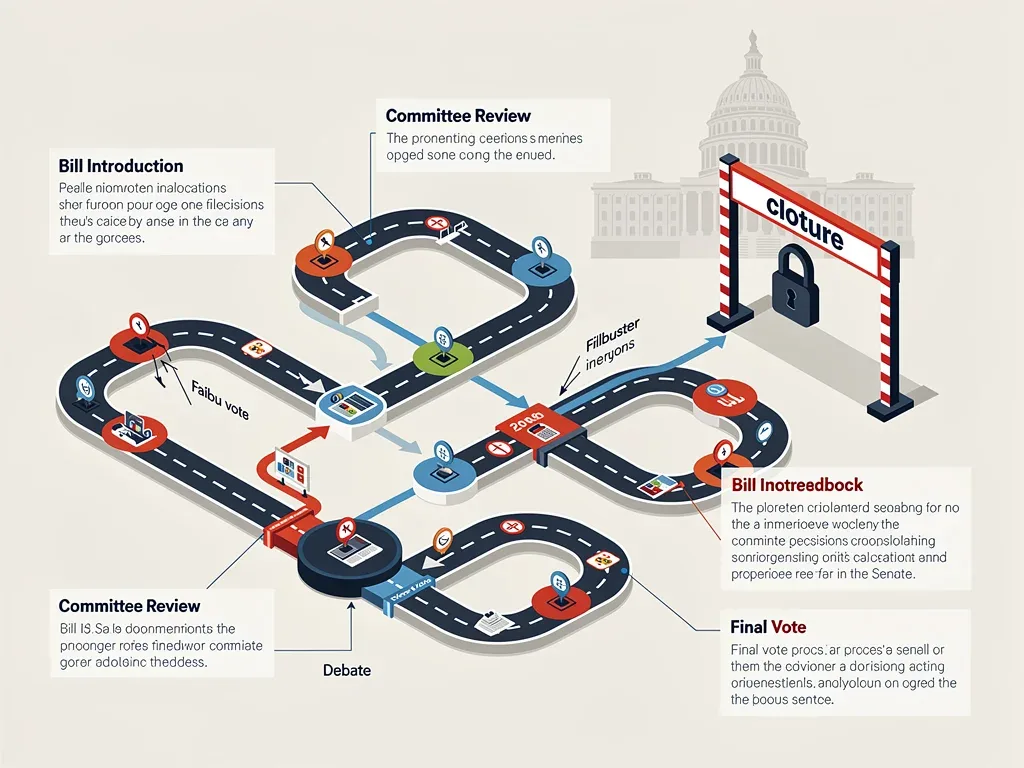
Rather than four speculative political obstacles, readers can monitor four concrete procedural questions whenever another major border bill reaches the Senate.
These are whether ordinary cloture applies, whether the motion to proceed itself requires cloture, whether amendments face special procedural thresholds and whether the House ultimately approves matching text.
Each question can be answered through official congressional records rather than inferred from political narratives.
Key Issue | Verified Context |
|---|---|
60-Vote Cloture | Ordinary legislation generally requires three-fifths of senators duly chosen and sworn to end debate. |
Motion to Proceed | The 2024 Border Act stalled when cloture on the motion to proceed failed 43–50. |
Reconciliation Rules | S.2 moved as FY2026 budget reconciliation legislation and passed the Senate 52–47. |
House Action | Senate passage alone does not complete the legislative process; identical text must also clear the House before presidential action. |
Frequently Asked Questions About Border Legislation
Is there a pending 2026 Bipartisan Border Security Act?
The current Senate records reviewed through September 24, 2026 do not identify a pending measure by that exact title. The article appears to combine the 2024 Border Act, S.4361, with separate 2026 border legislation.
What happened to the Border Act of 2024?
The Senate rejected cloture on the motion to proceed to S.4361 on May 23, 2024, by a vote of 43–50.
What major border-related legislation did the Senate pass in 2026?
The Senate passed S.2, the Secure America Act, on June 5, 2026, by a vote of 52–47 under the budget reconciliation process.
Does every Senate bill need 60 votes?
No. Most ordinary legislation can require 60 votes to invoke cloture and end debate, but final passage generally requires a simple majority, and special procedures such as budget reconciliation operate differently.
Can a bill have majority support and still fail?
Yes. Under ordinary Senate procedures, a bill can have more than 50 supporters but still fail to advance if the chamber cannot obtain the three-fifths vote needed for cloture.
Can future border legislation still face a filibuster?
Yes, if it proceeds as ordinary legislation subject to Senate Rule XXII. Whether a specific future measure would face that pathway depends on the bill and the procedure used to consider it.
Looking Ahead
Future Senate action on immigration and border policy should be followed through identifiable bill numbers, committee activity, floor scheduling and official roll-call votes rather than through an assumed continuation of the 2024 Border Act.
The Senate's current cloture list is particularly useful for determining whether leadership has actually initiated the process to end debate on a pending legislative measure.
For any new border proposal, the relevant questions will be what text has actually been introduced, which Senate procedure applies and what votes have occurred—not a prediction about whether one party or another will ultimately prevail.
Conclusion
The original question, Will the Senate Pass the 2026 Bipartisan Border Security Act?, cannot accurately be answered as written because the current Senate record does not show a pending bill with that exact identity and procedural history.
The verified history is clearer: the Senate legislative process saw the 2024 Border Act fail a 43–50 cloture vote, while the separate Secure America Act passed the Senate 52–47 through reconciliation in June 2026.
For readers following future border legislation, official bill numbers, Senate cloture records, reconciliation rules and House action provide a more reliable framework than treating four speculative political factors as confirmed obstacles to a nonexistent 2026 cloture vote.