Federal Campaign Finance Regulations: Impact on Independent Expenditure Groups
Advertisements
Federal campaign finance regulations establish how independent expenditure groups report political spending, disclose certain information, and maintain separation from candidate campaigns.
In 2026, these organizations continue operating under Federal Election Commission rules governing independent expenditures, disclaimers, reporting deadlines, and coordination.
Understanding these requirements is essential for political committees, advocacy organizations, donors, and voters following spending during the federal election cycle.
Understanding Federal Campaign Finance Regulations
Federal campaign finance law distinguishes independent expenditures from direct contributions because the spending is made without coordinating with a candidate or campaign.
Independent expenditure-only political committees, commonly called Super PACs, may raise unlimited contributions from permitted sources under current federal rules.
They cannot make contributions directly to candidates, making independence from candidate-controlled spending a central feature of their legal structure.
What Counts as an Independent Expenditure?
An independent expenditure generally involves communication that expressly advocates the election or defeat of a clearly identified federal candidate.
The expenditure must not be coordinated with the candidate, the candidate's authorized committee, or their agents under applicable FEC rules.
This distinction determines how the spending is classified, reported, and treated within the broader campaign finance framework.
Reporting Requirements for Independent Expenditures
Independent spending can trigger different reporting obligations depending on the amount, timing, type of filer, and election involved.
The FEC requires certain expenditures to be reported quickly when they reach specific thresholds close to an election.
These requirements are intended to provide timely public information about organizations and individuals spending money to influence federal races.
24-Hour and 48-Hour Reports
Independent expenditures may trigger 48-hour reporting when aggregate spending reaches the applicable threshold during specified periods before an election.
Closer to Election Day, qualifying independent expenditures can instead trigger a 24-hour reporting requirement under federal rules.
Political committees and noncommittee filers use different FEC forms, making accurate filer classification important for meeting reporting obligations.
Some independent expenditures trigger 48-hour disclosure requirements.
Certain expenditures closer to an election require 24-hour reports.
Political committees generally report independent expenditures on Form 3X.
Noncommittee entities making qualifying expenditures generally use Form 5.
Quarterly Reporting for Noncommittee Filers
Persons and entities that are not political committees may have additional reporting obligations after making independent expenditures connected to an election.
According to the FEC, qualifying noncommittee filers generally use Form 5 to disclose reportable independent expenditure activity.
Regular reporting does not eliminate separate 24-hour or 48-hour requirements when spending reaches the applicable thresholds during election periods.
How Super PACs Operate Under Federal Rules
Super PACs are independent expenditure-only political committees created to raise and spend funds independently in connection with federal elections.
Unlike traditional PACs, they may accept unlimited contributions from individuals, corporations, labor organizations, and other permitted sources.
The tradeoff is that they cannot contribute directly to candidates and must keep their independent spending separate from prohibited coordination.
Fundraising and Donor Relationships
Federal rules do not impose the same contribution limits on Super PAC donors that apply when individuals contribute directly to candidate committees.
However, Super PACs remain subject to registration, reporting, disclosure, recordkeeping, and source restrictions applicable under federal campaign finance law.
Organizations must therefore maintain accurate financial records even when the contributions they receive are not subject to ordinary candidate limits.
Super PACs may accept unlimited contributions from permitted sources.
They cannot make direct contributions to federal candidates.
Financial activity must be reported according to FEC requirements.
Prohibited sources and other legal restrictions still apply.
Independent Spending Versus Direct Contributions
A direct contribution transfers value to a candidate or committee, while an independent expenditure finances advocacy without giving funds to the candidate.
This legal distinction explains why Super PACs can spend substantial amounts supporting or opposing candidates without making candidate contributions.
Maintaining that distinction requires careful attention to coordination rules, communication practices, consultants, and campaign-related activities.
Coordination Rules and Independent Communications
Coordination is one of the most important compliance areas because spending that is coordinated may no longer qualify as truly independent.
The FEC uses regulatory tests to determine when communications involving outside organizations and campaigns may be treated as coordinated activity.
Organizations making independent expenditures therefore need processes that preserve separation when creating, financing, and distributing political communications.
Avoiding Improper Coordination
Coordination analysis can involve questions about payment, communication content, interactions with campaigns, vendors, consultants, and other factual circumstances.
Using information already available to the public is different from obtaining nonpublic strategic information directly from a candidate organization.
Because coordination rules are fact-specific, organizations often rely on internal compliance procedures when planning significant political communications.
Maintain clear separation from candidate campaign strategy.
Review relationships with consultants and service providers.
Document processes supporting independent decision-making.
Evaluate communications before major expenditures are authorized.
Disclaimer Requirements for Political Advertising
Federal political communications may require disclaimers identifying who paid for the message and whether a candidate authorized it.
Independent communications generally must make clear that they were not authorized by any candidate or candidate's committee.
Additional format requirements can apply depending on whether the communication appears online, in print, on television, or on radio.
What Independent Ads Must Disclose
The disclaimer generally identifies the person, committee, corporation, labor organization, or group responsible for paying for the communication.
It must also state when the communication was not authorized by a candidate or by the candidate's authorized committee.
These rules give voters information about who funded political messaging while distinguishing independent advocacy from official candidate communications.
Compliance Costs for Independent Expenditure Groups
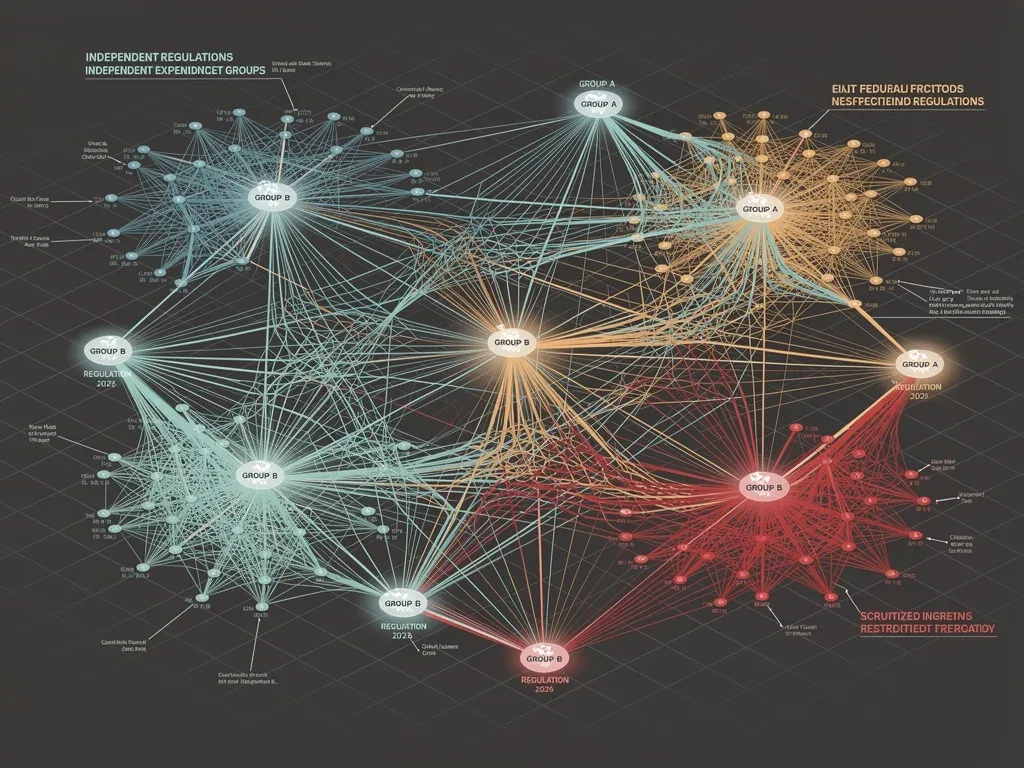
Federal reporting requirements can create administrative costs because organizations must track contributions, expenditures, deadlines, vendors, and advertising disclosures carefully.
Larger committees may use attorneys, accountants, compliance professionals, and specialized software to help manage increasingly complex election-cycle activity.
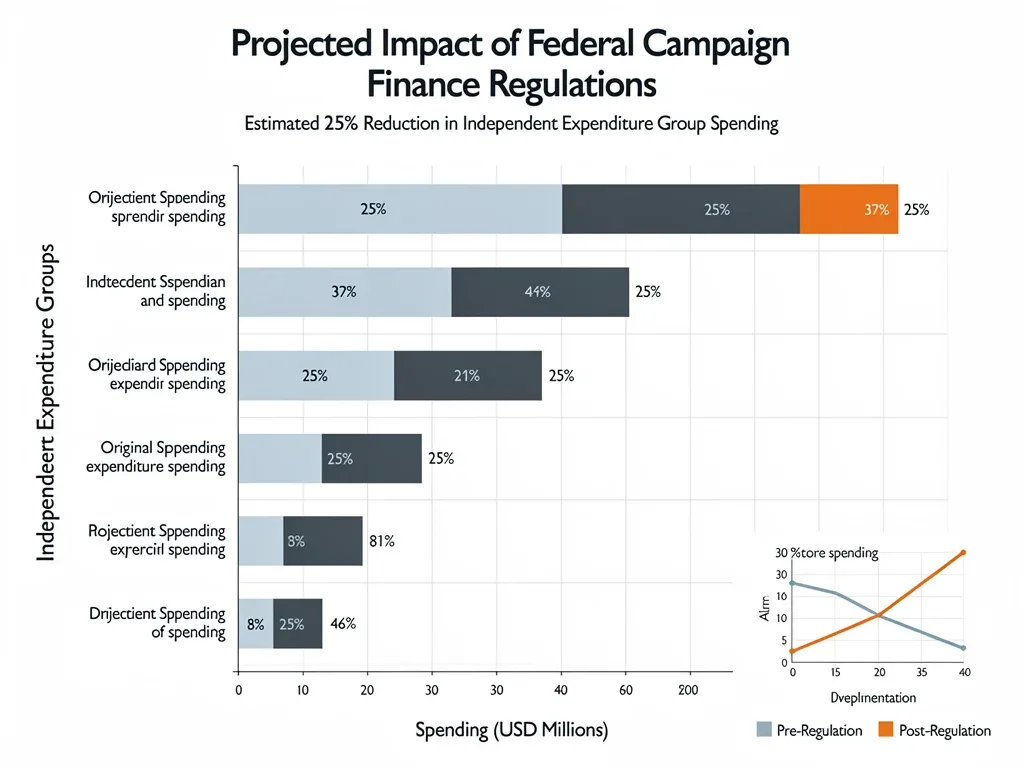
However, there is no official FEC figure establishing that these requirements reduce independent expenditure group operations by exactly 25%.
Recordkeeping and Legal Review
Accurate records help committees prepare required reports and respond when financial transactions raise questions during an election cycle.
Legal review can be especially important when organizations operate near the boundaries between independent advocacy and potentially coordinated activity.
Compliance spending therefore functions as an operational cost, although the amount varies substantially among organizations and election cycles.
Allocating Resources Efficiently
Organizations may decide how much to allocate toward advertising, research, administration, fundraising, legal review, and other activities.
Reporting requirements can influence internal budgeting because political communications sometimes create additional filing and recordkeeping responsibilities.
Each group ultimately determines how to balance advocacy spending with the infrastructure required to remain compliant with federal rules.
Technology and Campaign Finance Compliance
Technology can simplify campaign finance operations by organizing transactions, deadlines, donor information, and expenditure data within centralized systems.
Compliance platforms can also reduce repetitive manual work when organizations prepare recurring FEC filings or monitor reporting thresholds.
Digital systems do not replace legal analysis, but they can improve consistency when financial activity becomes large or frequent.
Automating Reporting and Recordkeeping
Software can help organizations track expenditures as they occur instead of reconstructing financial activity shortly before filing deadlines.
Automated alerts may also identify transactions approaching thresholds that can trigger accelerated independent expenditure reporting obligations.
Maintaining structured digital records can make corrections, reconciliations, and preparation of regulatory reports more manageable.
Track contributions and expenditures in centralized systems.
Monitor filing deadlines and reporting thresholds.
Maintain organized documentation for financial transactions.
Review automated data before submitting regulatory filings.
Using Data for Strategic Decisions
Independent expenditure groups also use data to evaluate audiences, advertising costs, geographic priorities, and the performance of political communications.
Analytics can help organizations decide where resources may have the greatest strategic value without changing the legal requirement for independent operation.
The value of technology therefore extends beyond compliance into budgeting, media planning, fundraising analysis, and organizational decision-making.
The Scale of Independent Expenditures in 2026
Independent expenditures remain an important component of federal political spending during the 2025–2026 election cycle.
FEC data show that independent expenditure-only committees continued accounting for a substantial share of reported independent spending early in the cycle.
This activity demonstrates that federal disclosure and coordination rules coexist with significant outside spending rather than eliminating independent political advocacy.
Independent Expenditure-Only Committees
Independent expenditure-only committees differ from candidate committees because their spending remains legally separate from candidate-controlled campaign expenditures.
These organizations can support or oppose federal candidates through communications while complying with applicable reporting and disclaimer requirements.
Their financial role can vary dramatically between races depending on donor interest, competition, political strategy, and election timing.
Transparency and Voter Information
Campaign finance disclosure gives voters access to information about committees, reported spending, donors, vendors, and other financial activity.
The FEC maintains public databases that allow users to examine federal political committee filings and reported independent expenditures.
This information helps journalists, researchers, campaigns, advocacy organizations, and citizens follow financial activity surrounding federal elections.
Why Disclosure Matters
Knowing who paid for political communication can provide additional context when voters evaluate advertisements supporting or opposing candidates.
Disclosure records also allow observers to compare spending patterns across organizations, races, election periods, and geographic areas.
Transparency does not determine whether political speech is persuasive, but it provides more information about the financial activity behind that speech.
Legal Developments Can Change the Framework
Federal campaign finance law continues to evolve through legislation, FEC regulations, advisory opinions, enforcement decisions, and federal court rulings.
Organizations cannot assume that rules applicable during one election cycle will remain identical during every subsequent campaign.
Monitoring official FEC guidance is therefore important for committees engaging in substantial political spending or election-related communications.
Distinguishing Independent and Party Spending
Independent expenditure rules should also be distinguished from rules governing coordinated expenditures made by political party committees.
These categories operate under different statutory provisions even though both involve political spending connected to federal candidates.
Changes affecting party coordinated expenditures therefore should not automatically be interpreted as identical changes for independent expenditure-only groups.
Preparing for Federal Election Spending
Organizations planning independent political spending should identify reporting obligations before communications are purchased, produced, or publicly distributed.
Waiting until after an expenditure occurs can make it harder to meet short filing windows that sometimes require disclosure within one or two days.
Clear internal approval procedures can help financial, legal, and communications teams understand responsibilities before election activity intensifies.
Practical Compliance Priorities
Organizations should confirm their filer status, reporting calendar, advertising disclaimer requirements, and rules applicable to the communication being planned.
They should also monitor aggregate spending because multiple smaller expenditures can collectively trigger reporting obligations during the same election.
When legal interpretation is uncertain, obtaining qualified campaign finance guidance can reduce the risk of relying on incorrect assumptions.
Identify the correct FEC filer classification.
Monitor 24-hour and 48-hour reporting requirements.
Review disclaimers before advertisements are distributed.
Maintain documentation supporting independent decision-making.
Key Aspect | 2026 Federal Framework |
|---|---|
Independent Spending | Permitted when spending remains independent from candidate campaigns. |
Reporting | Some expenditures trigger regular, 48-hour, or 24-hour FEC reports. |
Super PAC Funding | Unlimited contributions may be accepted from permitted sources. |
Advertising | Covered communications may require federal disclaimer notices. |
Coordination | Independent expenditures must remain separate from prohibited candidate coordination. |
Frequently Asked Questions About Federal Campaign Finance Regulations
Can Super PACs accept unlimited contributions?
Yes. Independent expenditure-only political committees may accept unlimited contributions from permitted individuals, corporations, labor organizations, and political committees.
Can a Super PAC contribute directly to a candidate?
No. Independent expenditure-only committees cannot make direct contributions to federal candidates or their authorized campaign committees.
When must independent expenditures be reported?
Reporting depends on the amount, filer, election, and timing, with some expenditures triggering regular reports plus 24-hour or 48-hour disclosures.
Do independent political ads require disclaimers?
Covered communications generally require a disclaimer identifying the payor and stating that the communication was not authorized by a candidate.
Is there an official 25% reduction affecting independent expenditure groups?
No official FEC source establishes a universal 25% operational reduction resulting from federal campaign finance rules in 2026.
Impact and Implications
Federal campaign finance regulations continue to shape how independent expenditure groups disclose spending and maintain separation from candidate campaigns.
The main compliance issues involve reporting deadlines, disclaimers, recordkeeping, coordination rules, and accurate classification of political activity.
Independent spending remains significant in federal elections, making transparency and careful compliance central to the 2026 political finance environment.