Energy Policy 2026: Balancing Renewables & Traditional Sources
Advertisements
Latest developments in U.S. Energy Policy in 2026 centre on rising electricity demand, grid reliability and the balance between renewable growth and traditional energy sources. EIA forecasts U.S. power use will hit record highs in 2026 and 2027, driven partly by data centres, AI demand and electrification.
Renewables remain a major growth area, with EIA projecting solar generation to rise strongly in 2026 and 2027, while coal generation declines as more capacity retires. Natural gas remains important for reliability, especially during peak demand periods and extreme weather.
Readers should monitor tax credit rules, grid expansion, storage deployment, natural gas prices, permitting changes and regional reliability risks. A recent federal court ruling restoring access to wind and solar tax credit pathways also makes clean energy incentives a key issue to watch.
The Evolving Landscape of Energy Policy in 2026
The energy sector in the United States is poised for significant transformation, driven by both technological advancements and pressing environmental concerns. The year 2026 marks a pivotal period where existing frameworks will be tested, and new strategies for energy production and consumption will take shape. This evolution directly impacts national security and economic stability.
Recent data helps clarify the scope and sequence of events, highlighting the urgency of effective governance in energy matters. Markets and local communities have reacted as information becomes public, with agencies coordinating responses under established protocols. The discussion around Energy Policy is at the forefront of these discussions.
The interplay between federal mandates, state-level initiatives, and private sector investments will define the trajectory of the energy mix. Stakeholders are closely monitoring legislative actions and technological breakthroughs to anticipate future trends. The goal remains a resilient and sustainable energy system for the long term.
Renewable Energy Initiatives: Growth and Challenges
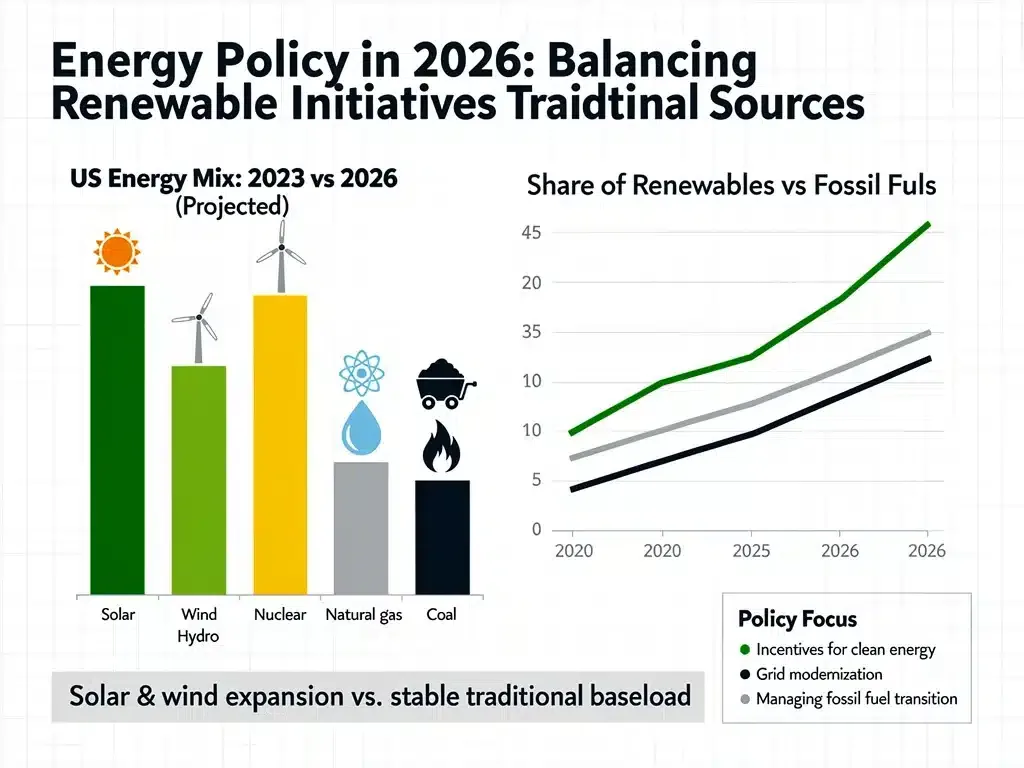
The push for renewable energy sources continues to gain momentum, with ambitious targets set for solar, wind, and hydropower capacities. Incentives, tax credits, and regulatory support are fueling this expansion, aiming to reduce carbon emissions and diversify the energy supply. This growth is a cornerstone of the Energy Policy.
However, integrating these intermittent sources into the existing grid presents substantial technical and logistical challenges. Grid modernization, energy storage solutions, and improved transmission infrastructure are essential to accommodate the increasing share of renewables. Addressing these hurdles is critical for sustained progress.
- Significant federal investments in renewable energy projects are expected to accelerate deployment.
- Technological advancements in battery storage and smart grid systems are crucial for stability.
- Interstate transmission line development remains a bottleneck for large-scale renewable integration.
Local opposition to large-scale renewable projects, particularly wind farms and solar arrays, also poses a challenge. Community engagement and equitable benefit-sharing models are becoming increasingly important for successful project implementation. This social dimension is an integral part of shaping the future of energy.
Traditional Energy Sources: Role and Adaptation
Despite the rapid growth of renewables, traditional energy sources—namely natural gas, oil, and nuclear power—continue to play a foundational role in meeting the nation’s energy demands. Their reliability, established infrastructure, and economic contributions cannot be overlooked in the immediate future. The careful management of these resources is central to the Energy Policy.
Natural gas, in particular, serves as a crucial bridge fuel, offering lower emissions than coal and providing dispatchable power to complement renewables. Its abundance in the U.S. makes it a strategic asset, but concerns about methane emissions and fracking impacts persist. The industry is under pressure to adopt cleaner production methods.
Nuclear power, a carbon-free baseload source, is experiencing renewed interest, with discussions around extending the lifespan of existing plants and developing advanced reactor technologies. Safety concerns and waste disposal challenges remain significant, yet its potential for stable, clean energy is undeniable. This complex dynamic is key to the overall energy strategy.
Navigating the Transition: Economic and Environmental Impacts
The transition to a cleaner energy economy involves complex economic considerations, including job displacement in traditional fossil fuel sectors and the creation of new opportunities in green industries. Policies must address workforce retraining and economic diversification in affected communities to ensure a just transition. This human element is vital for the success of Energy Policy.
Environmental impacts are at the heart of the energy policy debate, with a focus on reducing greenhouse gas emissions and mitigating climate change. While renewables offer a path to lower emissions, the environmental footprint of their manufacturing and disposal must also be carefully managed. A holistic approach is essential for true sustainability.
- Carbon capture and storage technologies are being explored to reduce emissions from fossil fuel power plants.
- Regulations on methane emissions from oil and gas operations are tightening to curb environmental impact.
- Investment in sustainable manufacturing and recycling for renewable energy components is growing.
The economic competitiveness of various energy sources is constantly shifting, influenced by technological innovation, commodity prices, and policy incentives. Striking the right balance between affordability, reliability, and environmental stewardship is a continuous challenge for policymakers. This intricate balance defines the ongoing energy discourse.
Policy Frameworks and Regulatory Challenges
Effective Energy Policy requires robust policy frameworks and dynamic regulatory oversight. Federal agencies, such as the Department of Energy and the Environmental Protection Agency, play a crucial role in setting standards, allocating funding, and enforcing compliance. Their decisions directly influence market trends and technological adoption.
State-level policies, including Renewable Portfolio Standards and carbon pricing mechanisms, vary significantly across the nation, creating a patchwork of incentives and regulations. Harmonizing these diverse approaches while respecting state autonomy is a persistent challenge for national energy strategy. Cooperation is vital for a cohesive national energy vision.
International agreements and global energy markets also exert considerable influence on domestic energy policy. Geopolitical events, global supply chains, and international climate commitments shape the strategic decisions made within the United States. The interconnectedness of global energy systems cannot be overstated in this context.
Innovation and Future Technologies
Innovation is a critical driver for achieving the ambitious goals of Energy Policy. Research and development in areas such as advanced nuclear reactors, hydrogen fuel cells, and enhanced geothermal systems promise to unlock new possibilities for clean and reliable energy. These emerging technologies could fundamentally alter the energy landscape.
Government funding and private sector investment in energy research are essential to accelerate the commercialization of these novel solutions. Public-private partnerships are proving instrumental in bridging the gap between laboratory discoveries and widespread deployment. The pace of innovation will dictate the speed of energy transition.
Digital technologies, including artificial intelligence and blockchain, are also transforming energy management, enabling smarter grids, more efficient consumption, and enhanced cybersecurity. These tools are vital for optimizing energy systems and improving resilience against disruptions. The integration of these technologies is a key component of future energy success.
Geopolitical Implications of Energy Policy
The Energy Policy has profound geopolitical implications, influencing international relations, trade balances, and national security. A diversified and secure energy supply reduces reliance on volatile global markets and strengthens the nation’s strategic position. Energy independence remains a long-term goal for the United States.
The shift towards renewable energy can also create new dependencies, particularly on critical minerals and manufacturing capabilities concentrated in specific regions globally. Securing these supply chains and fostering domestic production are becoming increasingly important for energy resilience. Diversifying sourcing is a strategic imperative.
Furthermore, the U.S. role in global climate negotiations and its commitment to reducing emissions are closely tied to its domestic energy policies. Leading by example in transitioning to cleaner energy can bolster diplomatic influence and foster international cooperation on climate action. The global community watches U.S. energy decisions closely.
Public Perception and Engagement
Public perception and engagement are crucial for the successful implementation of any energy policy. Transparency, education, and active community involvement can build trust and support for new initiatives, particularly those involving infrastructure development or changes in energy costs. The success of Energy Policy hinges on public buy-in.
Misinformation and public skepticism can hinder progress, making it imperative for policymakers and industry leaders to communicate clearly and address concerns. Public forums, educational campaigns, and accessible information are vital tools for fostering informed public discourse. An engaged populace is an empowered populace.
- Public opinion polls consistently show strong support for renewable energy, but concerns about cost and reliability persist.
- Local communities often seek direct benefits from energy projects, such as job creation or tax revenues.
- Effective communication strategies are needed to explain the long-term benefits and trade-offs of energy transition.
Advocacy groups, environmental organizations, and industry associations all play a significant role in shaping public opinion and influencing policy decisions. Their diverse perspectives contribute to the ongoing debate and highlight the complex societal dimensions of energy choices. Engaging these groups is essential for comprehensive policy development.
Investment and Funding for Energy Transition
The financial landscape surrounding Energy Policy is characterized by significant investment in both traditional and emerging energy sectors. Public funding, private capital, and international partnerships are all critical for financing the massive infrastructure projects and technological innovations required for the energy transition. Capital allocation is a key factor.
Government incentives, such as tax credits for renewable energy production and carbon capture technologies, aim to de-risk investments and attract private capital. These fiscal policies are designed to accelerate the deployment of cleaner energy solutions and support market growth. The role of government in stimulating investment is undeniable.
Private sector investment, driven by ESG (Environmental, Social, and Governance) mandates and the pursuit of new market opportunities, is increasingly flowing into renewable energy and sustainable technologies. Financial institutions are developing new products and services to support green finance. This trend reflects a growing recognition of the long-term value of sustainable energy.
Challenges and Opportunities in Energy Markets
Energy markets are experiencing unprecedented volatility, influenced by geopolitical tensions, supply chain disruptions, and the rapid integration of intermittent renewable sources. Managing this volatility while ensuring grid stability and energy affordability is a primary challenge for regulators and market operators. The resilience of these markets is paramount.
Opportunities abound in developing smart grid technologies, energy storage solutions, and demand-side management programs that can optimize energy use and enhance grid flexibility. These innovations can unlock new efficiencies and create value for consumers and producers alike. The market is ripe for transformative solutions.
- Carbon markets and emissions trading schemes are being explored as mechanisms to incentivize emissions reductions.
- The development of regional energy markets can improve efficiency and facilitate cross-state energy transfers.
- New business models are emerging, focusing on energy as a service and decentralized energy production.
The evolving regulatory environment and the increasing emphasis on sustainability are reshaping investment decisions and market strategies across the energy sector.
Companies that adapt quickly to these changes will be best positioned for long-term success. The energy market is in a constant state of flux, demanding agility and foresight.
| Key Aspect | Brief Description |
|---|---|
| Renewable Growth | Increased investment and deployment in solar, wind, and other clean energy sources. |
| Traditional Role | Continued reliance on natural gas, oil, and nuclear for grid stability and demand. |
| Policy Challenges | Navigating regulations, infrastructure needs, and economic impacts of energy transition. |
| Future Technologies | Emphasis on R&D for advanced nuclear, hydrogen, and smart grid solutions. |
Frequently Asked Questions About Energy Policy in 2026
What are the main goals of US Energy Policy in 2026?▼The primary goals involve ensuring energy security, promoting economic competitiveness, and advancing environmental sustainability. This includes accelerating renewable energy deployment while maintaining reliability with traditional sources, all under the umbrella of Energy Policy.
How will renewables and traditional sources coexist in 2026?▼They will coexist through a strategic balance where traditional sources like natural gas provide baseload power and grid stability, complementing the intermittent nature of renewables like solar and wind. Advanced grid management and energy storage are key to this integrated approach, central to Energy Policy.
What role does government policy play in this balance?▼Government policy is crucial in setting targets, providing incentives, enforcing regulations, and funding research and development. It shapes market conditions and guides investment towards a balanced energy portfolio, which is essential for the effectiveness of Energy Policy.
What are the biggest challenges for energy policy in 2026?▼Key challenges include grid modernization, managing intermittency of renewables, ensuring energy affordability, addressing geopolitical supply chain risks, and securing public acceptance for new infrastructure projects. These factors significantly impact Energy Policy.
How can individuals contribute to a balanced energy future?▼Individuals can contribute by adopting energy-efficient practices, investing in renewable energy solutions for homes, supporting policies that promote sustainable energy, and staying informed about local and national energy developments. Their collective actions support the objectives of Energy Policy.
Looking Ahead: The Future of US Energy
The intricate journey of Energy Policy will undoubtedly continue to evolve, with profound implications for the nation and the world.
Staying informed about legislative changes, technological breakthroughs, and shifts in global energy markets will be paramount.
The decisions made today will shape the energy landscape for decades to come, demanding continuous attention and adaptive strategies. The goal is a resilient, sustainable, and economically sound energy future for the United States.