Student Loan Forgiveness 2026: Federal Programs & Eligibility
Advertisements
Student Loan Forgiveness 2026 remains centred on programmes such as Public Service Loan Forgiveness (PSLF), income-driven repayment forgiveness, and specific discharge options rather than a new universal cancellation programme. PSLF still generally requires 120 qualifying payments while working full time for an eligible government or nonprofit employer.
A major 2026 change is that the SAVE Plan ended on March 10, 2026, while new repayment options, including the Repayment Assistance Plan (RAP) and Tiered Standard planm became available from July 1. Borrowers affected by SAVE should review current repayment choices carefully.
Borrowers should monitor eligibility rules, PSLF payment counts, IDR forgiveness progress, court actions, and Department of Education guidance. Choosing the correct repayment plan is especially important because forgiveness eligibility depends on loan type, payment history, and programme-specific requirements.
Understanding the Current State of Student Loan Forgiveness 2026
The conversation around Student Loan Forgiveness 2026 continues to evolve, with various proposals and policy adjustments coming into focus. Federal authorities are actively reviewing and implementing changes that could significantly impact borrowers nationwide.
These developments are not static; they represent ongoing efforts to address the widespread issue of student debt. Staying informed about each new announcement is vital for those seeking relief.
The current environment reflects a dynamic interplay between legislative intent and administrative execution, making it essential to track official communications closely.
Key Federal Programs in Focus
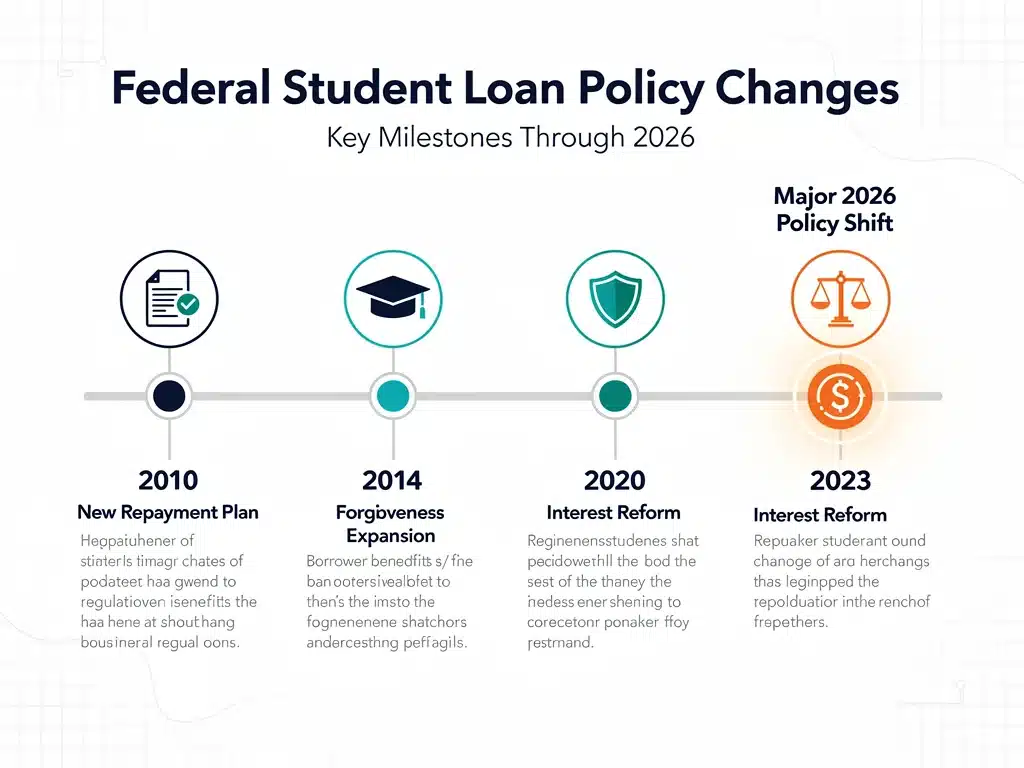
Several federal programs are central to the discussion of student loan forgiveness. These initiatives aim to provide relief through different mechanisms, catering to various borrower circumstances.
Understanding the nuances of each program is critical for determining potential eligibility. Borrowers should research these options thoroughly to identify the best fit for their financial situation.
The Department of Education regularly updates guidelines for these programs, necessitating continuous monitoring by those affected.
- Public Service Loan Forgiveness (PSLF): This program offers forgiveness for borrowers employed by qualifying non-profit organizations or government agencies after 120 qualifying monthly payments.
- Income-Driven Repayment (IDR) Plans: These plans adjust monthly payments based on income and family size, with remaining balances forgiven after 20 or 25 years of payments.
- Teacher Loan Forgiveness: Designed for educators, this program provides up to $17,500 in forgiveness for highly qualified teachers who serve low-income schools for five consecutive years.
Recent Legislative and Policy Shifts
The past year has seen significant legislative discussions and policy shifts impacting student loan forgiveness. These changes are often a response to economic conditions and public advocacy.
New regulations or executive actions can alter eligibility requirements or expand the scope of existing programs. Borrowers must be aware of how these shifts might affect their individual cases.
The federal government’s approach to student debt relief is subject to ongoing debate, making future changes a distinct possibility.
Eligibility Criteria for Student Loan Forgiveness 2026
Eligibility for Student Loan Forgiveness 2026 programs varies significantly depending on the specific initiative. Factors such as loan type, employment history, and income levels all play a crucial role.
Borrowers must carefully review the requirements for each program to determine if they qualify. Misunderstanding these criteria can lead to missed opportunities for relief.
The Department of Education provides detailed guidance, which should be the primary resource for eligibility verification.
Specific Loan Types and Their Impact
Not all student loans are eligible for every forgiveness program. Federal Direct Loans are typically the most widely covered, while private loans generally are not.
Borrowers with Federal Family Education Loan (FFEL) Program loans or Perkins Loans might need to consolidate them into a Direct Consolidation Loan to qualify for certain benefits. This step is often overlooked but is critical for many.
Understanding your specific loan type is the first step in assessing your forgiveness options for Student Loan Forgiveness 2026.
Employment and Income Requirements
Many forgiveness programs, such as PSLF and IDR plans, have strict employment and income requirements. These criteria ensure that relief is directed towards those who meet specific service or financial thresholds.
For PSLF, continuous full-time employment with a qualifying employer is mandatory. For IDR plans, annual income and family size determine payment amounts and the timeline for forgiveness.
Regular verification of employment and income is often required to maintain eligibility, underscoring the ongoing commitment needed from borrowers.
Navigating the Application Process for 2026
The application process for student loan forgiveness can be complex, requiring meticulous attention to detail and adherence to deadlines. Preparing all necessary documentation is paramount.
Errors or omissions in applications can lead to delays or outright rejections. Borrowers are advised to gather all relevant paperwork well in advance of submission.
Official channels, such as the Federal Student Aid website, offer comprehensive resources and forms to guide applicants through each step.
Documentation and Deadlines
Applicants for Student Loan Forgiveness 2026 programs typically need to provide proof of income, employment history, and loan details. These documents must be accurate and up-to-date.
Deadlines for applications and annual certifications are strictly enforced. Missing a deadline can result in a loss of eligibility or a delay in receiving benefits.
It is prudent for borrowers to create a checklist of required documents and set reminders for important dates to ensure timely submission.
Common Pitfalls to Avoid
Several common pitfalls can derail a student loan forgiveness application. These include submitting incomplete forms, failing to certify employment annually, or having the wrong type of loans.
Another frequent issue is not understanding the difference between various repayment plans and their impact on forgiveness eligibility. Borrowers sometimes enroll in a plan that does not count towards their desired forgiveness program.
Seeking advice from a trusted financial advisor or a Department of Education representative can help circumvent these common mistakes and streamline the process for Student Loan Forgiveness 2026.
Impact of Economic Climate on Forgiveness Programs
The broader economic climate significantly influences federal policy decisions regarding student loan forgiveness. Economic downturns or periods of high inflation can prompt lawmakers to consider new relief measures.
Conversely, periods of strong economic growth might lead to a reevaluation of existing programs. These external factors underscore the dynamic nature of student loan policy.
Borrowers should monitor economic indicators and related legislative debates, as these can foreshadow future changes to forgiveness options.
Inflation and Cost of Living Adjustments
Rising inflation and increased cost of living can place additional strain on borrowers, making student loan payments more challenging. This economic pressure often fuels calls for expanded forgiveness programs.
Policymakers may consider adjustments to income-driven repayment thresholds or other program parameters to reflect current economic realities. These changes aim to make forgiveness more accessible.
The interplay between economic conditions and the design of Student Loan Forgiveness 2026 programs is a continuous area of focus for federal agencies and advocacy groups.
Future Outlook and Potential Changes
The future outlook for student loan forgiveness remains a subject of considerable speculation. While some programs are well-established, others are constantly under review for potential modifications or expansions.
Political shifts and evolving public opinion can also influence the direction of federal student aid policies. Borrowers should remain prepared for possible changes in the coming years.
Staying engaged with reputable news sources and official government announcements will be crucial for understanding the evolving landscape of Student Loan Forgiveness 2026.
Resources and Support for Borrowers
Accessing reliable resources and support is essential for borrowers navigating the complexities of student loan forgiveness. The Department of Education offers a wealth of information and direct assistance.
Non-profit organizations and financial counselors also provide valuable guidance, helping borrowers understand their options and avoid scams. It is vital to seek help from trusted entities.
Utilizing these resources can empower borrowers to make informed decisions and successfully pursue available forgiveness opportunities for Student Loan Forgiveness 2026.
Official Government Websites and Tools
The Federal Student Aid (FSA) website is the authoritative source for information on federal student loans and forgiveness programs. It offers detailed guides, application forms, and a loan simulator tool.
Borrowers can also access their loan history, track payments, and update their contact information through their FSA account. This portal is indispensable for managing federal student debt.
Regularly visiting the FSA website ensures access to the most current and accurate information regarding Student Loan Forgiveness 2026 and other aid programs.
Seeking Professional Financial Advice
For complex situations or personalized guidance, seeking professional financial advice can be highly beneficial. Certified financial planners or student loan counselors can offer tailored strategies.
These professionals can help borrowers analyze their specific circumstances, identify eligible programs, and navigate the application process. They can also assist with long-term financial planning.
While many resources are free, investing in professional advice can often save borrowers significant time and money in the long run, particularly when dealing with the intricacies of Student Loan Forgiveness 2026.
The Role of Advocacy and Public Opinion
Advocacy groups and public opinion play a significant role in shaping the trajectory of student loan forgiveness policies. Continuous public discourse and organized efforts can influence legislative priorities.
These groups often highlight the economic and social impacts of student debt, urging lawmakers to consider more comprehensive relief measures. Their work helps keep student loan forgiveness on the national agenda.
The sustained pressure from these organizations and the public can lead to meaningful policy changes, impacting how Student Loan Forgiveness 2026 and beyond are structured.
Understanding Different Perspectives
The debate around student loan forgiveness encompasses a wide range of perspectives. Some argue for universal forgiveness, citing economic stimulus and social equity, while others raise concerns about fairness and fiscal responsibility.
These differing viewpoints contribute to the complexity of policy-making. Understanding them provides crucial context for why certain programs are adopted or modified.
A balanced view of these perspectives is essential for comprehending the political and economic forces at play in discussions about Student Loan Forgiveness 2026.
How Public Engagement Influences Policy
Public engagement, through petitions, protests, and electoral participation, directly influences policy decisions. Lawmakers are often responsive to the concerns and demands of their constituents.
When a critical mass of the public advocates for student loan relief, it can create momentum for legislative action. This democratic process is fundamental to how policy evolves.
Therefore, staying informed and participating in public discourse can indirectly but significantly impact the future of Student Loan Forgiveness 2026 and related initiatives.
Potential Changes and Future Scenarios for 2026
As we approach 2026, several potential changes and future scenarios for student loan forgiveness are being discussed. These range from minor programmatic adjustments to more sweeping reforms.
The political climate, economic conditions, and ongoing legal challenges will all contribute to shaping these outcomes. Borrowers should prepare for a range of possibilities.
Anticipating these scenarios can help individuals plan their financial futures more effectively, regardless of the ultimate direction of federal policy regarding Student Loan Forgiveness 2026.
New Proposals on the Horizon

Various new proposals for student loan forgiveness are continually emerging from both legislative bodies and advocacy groups. These often aim to address perceived gaps or inefficiencies in current programs.
Some proposals suggest expanding eligibility criteria, while others focus on simplifying the application process or increasing the amount of debt that can be forgiven. These ideas reflect an ongoing effort to refine federal aid.
Keeping an eye on these emerging proposals is crucial, as they could become the next generation of Student Loan Forgiveness 2026 initiatives.
Legal Challenges and Their Implications
Student loan forgiveness programs have frequently faced legal challenges, which can significantly impact their implementation and longevity. Court rulings can uphold, modify, or even halt federal initiatives.
These legal battles add a layer of uncertainty to the future of forgiveness. Borrowers must understand that policy changes can be influenced by judicial decisions.
Monitoring these legal developments is an important part of staying current on the potential outcomes for Student Loan Forgiveness 2026.
| Key Point | Brief Description |
|---|---|
| Program Evolution | Federal programs are continuously updated; staying informed is critical for borrowers. |
| Eligibility Factors | Loan type, employment, and income are key determinants for forgiveness qualification. |
| Application Process | Meticulous documentation and adherence to deadlines are essential for success. |
| Economic Impact | Economic conditions influence policy decisions and program adjustments. |
Frequently Asked Questions About Student Loan Forgiveness 2026
The main federal programs include Public Service Loan Forgiveness (PSLF), Income-Driven Repayment (IDR) plans, and Teacher Loan Forgiveness. Each has distinct eligibility criteria and benefits, catering to different borrower situations and professional paths.
Generally, federal Direct Loans are eligible for most forgiveness programs. Borrowers with FFEL or Perkins Loans may need to consolidate them into a Direct Consolidation Loan. Checking your loan type on the Federal Student Aid website is the first step.
Applicants typically need proof of income, detailed employment history with qualifying employers, and comprehensive loan statements. It’s crucial to ensure all documents are accurate and submitted before any specified deadlines to avoid processing delays.
Yes, economic factors like inflation and cost of living can influence federal policy on student loan forgiveness. Policymakers often adjust program parameters in response to economic pressures, potentially expanding or modifying eligibility and benefits.
The Federal Student Aid (FSA) website is the official source for federal loan information. Additionally, non-profit organizations and certified financial counselors offer valuable guidance. Always consult trusted resources to ensure accurate information and avoid scams.
Looking Ahead
The outlook for Student Loan Forgiveness 2026 remains fluid as federal repayment and forgiveness policies continue to evolve through administrative, legal, and legislative changes.
Borrowers should regularly review official Federal Student Aid guidance, confirm their repayment plan, and track qualifying payment counts or discharge requirements that apply to their loans.
Future developments will depend on federal policy decisions, court actions, and programme-specific rules, making accurate and current information essential for long-term student debt planning.