Energy Assistance Programs 2026: Save on Winter Bills

Advertisements
Energy Assistance Programs in 2026 include LIHEAP, state and utility assistance, and the separate Weatherization Assistance Program.
Eligibility, benefit amounts, application periods, and available services vary by location, so households should verify current rules through their state, tribe, territory, utility, or local provider.
Energy Assistance Programs remain an important resource for U.S. households facing high heating or cooling costs. Federal programs provide funding and broad eligibility frameworks, but states, tribes, territories, utilities, and local agencies determine many of the practical application rules.
For fiscal year 2026, the Low Income Home Energy Assistance Program received approximately $4.13 billion in total federal funding. Those funds support locally administered assistance rather than creating one nationwide benefit amount or identical application process for every household.
As the 2026–27 heating season approaches, households should also distinguish fiscal-year funding from seasonal application periods. Federal FY2026 ends September 30, 2026, while state programs can operate on schedules that extend beyond that date or use later federal funding.
Understanding Federal Energy Assistance Programs 2026
The primary federal program for direct home-energy assistance is the Low Income Home Energy Assistance Program, commonly known as LIHEAP. It is funded by the U.S. Department of Health and Human Services and administered through states, tribes, and territories.
LIHEAP can support eligible households with home-energy bills, energy crises, and other authorized energy-related services. Individual grantees decide how to structure benefits within federal requirements, so assistance can differ according to location, heating source, household circumstances, and available funding.
This means Energy Assistance Programs 2026 should not be described as a single federal payment. Applicants need to identify their local LIHEAP administrator and review the specific benefit types, income limits, documentation, and application period available where they live.
Key Funding Developments for LIHEAP 2026
Federal FY2026 LIHEAP funding totaled approximately $4.13 billion. An initial funding release was followed by approximately $421.5 million in additional regular block-grant funding announced in April, completing the principal federal allocation for the fiscal year.
In August 2026, the Office of Community Services also released approximately $9.2 million in reallotted prior-year funds as the final FY2026 funding issuance. Those funds are subject to federal obligation and allowable carryover requirements applicable to LIHEAP grantees.
Therefore, households should not rely on earlier speculation that funding might increase later in 2026. The relevant question now is how much assistance remains available locally and what FY2027 resources will support the upcoming 2026–27 heating season.
Eligibility Criteria and Application Process
LIHEAP eligibility is primarily income-based, but there is no single income cutoff that applies identically nationwide. Federal rules establish parameters, while each grant recipient selects an eligible-income standard and can prioritize households with particularly high energy burdens or vulnerable members.
Applicants may be asked for proof of household income, energy expenses, identity, residence, or other information necessary under the local program. Exact documentation varies, so families should check their administering agency before collecting documents that may not actually be required.
Applying does not guarantee assistance because benefits depend on eligibility, program design, available appropriations, and local funding. Some agencies accept applications online, while others use community-action organizations, telephone assistance, mailed forms, or in-person offices.
- Proof of household income when required by the local administrator.
- Recent heating, electricity, gas, propane, or other qualifying energy bills.
- Identification or household information requested by the administering agency.
- Additional documents required for crisis assistance or other specialized benefits.
State and Local Energy Assistance Programs 2026
LIHEAP funding reaches households through state, tribal, and territorial programs rather than through one centralized federal payment system. As a result, benefit amounts, application dates, crisis rules, eligible fuels, and administrative procedures can vary significantly across the United States.
Additional help can come from state programs, municipal assistance, nonprofit organizations, and regulated utilities. These resources may operate alongside LIHEAP and can sometimes address situations that a particular federal-funded benefit does not cover.
Households researching Energy Assistance Programs 2026 should therefore begin locally. A state LIHEAP office, community-action agency, utility commission, tribal program, or 211 referral service can help identify programs actually available in the applicant’s area.
Exploring State-Specific Initiatives
California, for example, administers LIHEAP while also having utility discount programs such as CARE for qualifying customers of participating utilities. New York administers its Home Energy Assistance Program, commonly called HEAP, using federal LIHEAP funding alongside state-specific administrative rules.
Program priorities also differ by climate. Colder areas may concentrate resources on heating emergencies, fuel delivery, or furnace-related needs, while states with substantial cooling demand can direct assistance toward electricity costs and summer energy emergencies.
These examples should not be interpreted as nationwide benefits. Applicants need to verify current programs for their state and utility because eligibility, application windows, income calculations, benefit amounts, and whether multiple programs can be combined all depend on local rules.
Utility Company Programs and Discounts
Electric and natural-gas utilities may offer income-qualified discounts, payment arrangements, budget billing, arrearage-management plans, or emergency assistance. Availability frequently depends on state regulation and the specific utility, so customers should ask their provider directly about current options.
Budget billing is different from financial assistance because it generally spreads expected annual costs across more predictable monthly payments rather than reducing the total amount owed. Deferred-payment arrangements similarly restructure debt rather than automatically eliminating it.
Utility assistance can sometimes complement government Energy Assistance Programs, but combinations are governed by local rules. Customers should confirm how one benefit affects another and should never assume that a particular utility discount exists nationwide.
- Income-qualified utility discounts where available.
- Budget billing to make monthly payments more predictable.
- Arrearage-management or payment-plan options offered by some utilities.
- Energy-efficiency services or rebates available under individual utility programs.
Maximizing Savings with Energy Assistance Programs 2026
Direct bill assistance can provide short-term financial relief, while efficiency improvements can address the amount of energy a home uses over time. These are separate strategies and should not be presented as though every LIHEAP applicant automatically receives home upgrades.
The federal Weatherization Assistance Program, or WAP, is administered by the U.S. Department of Energy and operates separately from LIHEAP. States and local organizations use WAP funding to improve energy efficiency and health and safety conditions in eligible homes.
Combining eligible assistance with reasonable energy-saving measures can reduce household expenses, but savings are not guaranteed at a specific amount. Home characteristics, climate, equipment, utility prices, occupant behavior, and the improvements performed all affect actual results.
Leveraging Weatherization and Energy Efficiency
Under Department of Energy guidance, households at or below 200% of the federal poverty guidelines can meet the basic income eligibility standard for WAP. States may also use certain authorized alternative eligibility criteria, including qualifying LIHEAP standards.
Both homeowners and renters can apply for WAP, although rental properties generally require coordination with the property owner before work begins. Eligible applicants may also face waiting lists because qualifying for the program does not guarantee immediate weatherization service.
Weatherization measures are determined through the local program and home assessment rather than by allowing applicants to select any desired renovation. Improvements can include insulation, air sealing, equipment-related measures, and other cost-effective work identified for the particular dwelling.
- Professional home energy assessment when the home reaches the service stage.
- Insulation and air-sealing measures where cost-effective and appropriate.
- Energy-related health and safety improvements within program rules.
- Heating or cooling system measures when justified by the assessment.
Smart Energy Habits for Continuous Savings
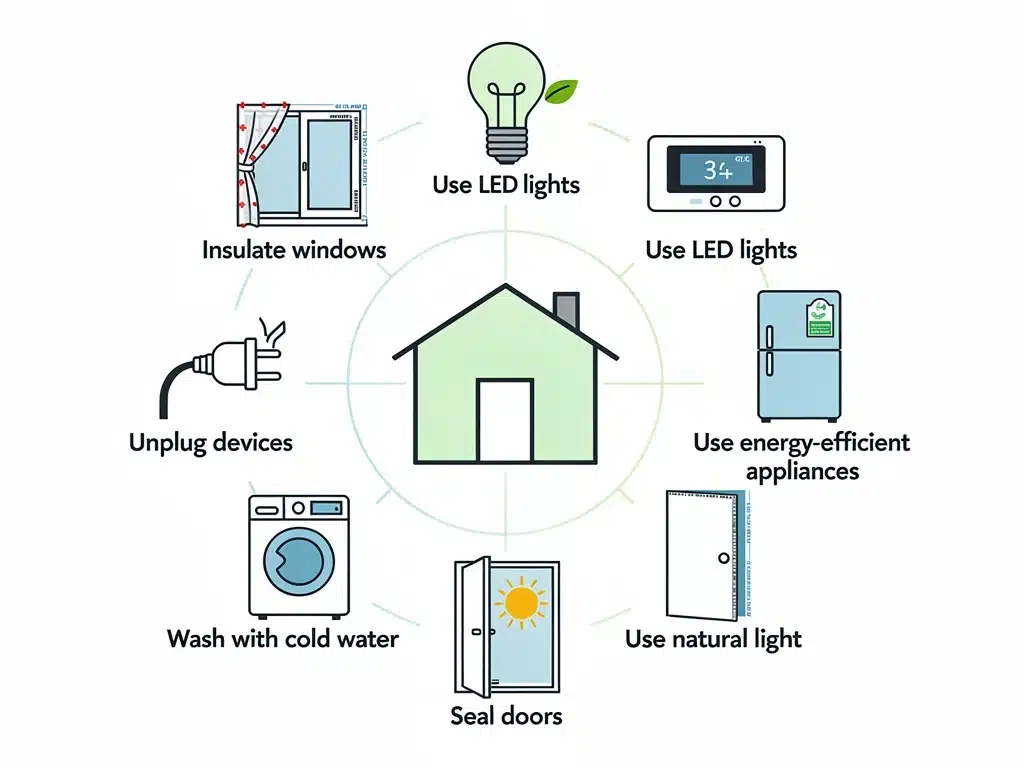
Households can also review everyday energy use while waiting for or receiving assistance. Thermostat settings, water heating, lighting, appliance use, and air leakage can influence bills, although the most effective changes vary according to climate and home design.
Energy-saving advice should remain practical and safe. Residents should not lower indoor temperatures to unsafe levels, disable necessary medical equipment, or use ovens and other inappropriate appliances as substitute heating sources simply to reduce utility expenses.
Combining affordable behavioral changes with appropriate Energy Assistance Programs 2026 can help manage costs, but households experiencing an imminent disconnection or fuel shortage should contact their utility and local energy-assistance provider instead of relying only on conservation measures.
Application Deadlines and Important Dates for 2026
There is no single national LIHEAP application deadline for households. States, tribes, and territories establish their own operating periods, and some offer separate application windows for regular heating assistance, cooling aid, crisis intervention, or other program components.
Federal FY2026 ends on September 30, 2026, but this does not mean every household application automatically closes on that date. Local program calendars and allowable use of funds can differ, making the administering agency’s published schedule the appropriate source.
For households preparing for winter 2026–27, it is also important to watch FY2027 information. Federal administrators issued FY2027 LIHEAP model-plan guidance in June 2026, while actual local benefit availability depends on funding and each grantee’s implementation.
Navigating the Application Process Effectively
The most efficient approach is to identify the correct local administrator before submitting anything. Applicants can then review current eligibility criteria, benefit categories, required documents, application methods, and whether appointments or separate crisis procedures are necessary.
Submitting complete and accurate information can reduce avoidable processing delays, but approval times vary. Applicants should keep confirmation numbers, copies of submitted documents, and notices received from the program so that missing information can be addressed promptly.
People applying for Energy Assistance Programs should also distinguish between LIHEAP and weatherization applications. The programs have different administrators and processes even though households may qualify for both under overlapping income rules.
Resources for Application Support
The federal LIHEAP Clearinghouse provides information about how LIHEAP operates across states, tribes, and territories and includes access to the National Energy Assistance Referral service. Local administrators remain responsible for determining household eligibility and benefits.
Community-action agencies often administer or support local assistance and can help applicants identify appropriate programs. The 211 service can also connect households with utility, housing, food, and other local resources where 211 coverage is available.
For weatherization, the Department of Energy directs applicants to state administrators and local providers. Utility customers should separately contact their electricity or gas company for discount programs, crisis arrangements, payment plans, or other assistance specific to that provider.
- LIHEAP Clearinghouse and local LIHEAP administrators for federal-funded energy assistance.
- State, tribal, territorial, and community-action agencies for local applications.
- 211 for referrals to participating community resources.
- Utility customer-service departments for company-specific programs and payment options.
Impact of Energy Assistance Programs 2026 on Households
Home-energy assistance can reduce an eligible household’s immediate energy burden or help address an energy crisis. The actual value differs considerably because LIHEAP benefits are set by local administrators and can reflect income, household characteristics, fuel type, energy costs, and available funding.
The program is designed particularly around households with lower incomes and significant home-energy needs. Grantees can also prioritize households that include older adults, young children, people with disabilities, or other groups identified as particularly vulnerable under program rules.
It is therefore more accurate to describe Energy Assistance Programs 2026 as a safety-net resource than as guaranteed savings. Assistance may help prevent or respond to utility emergencies, but eligibility does not necessarily mean every energy bill will be fully paid.
Addressing Energy Burden and Vulnerability
Energy burden describes the share of household income devoted to energy costs. Lower-income households can face disproportionately high burdens because necessary heating, cooling, and electricity expenses consume a larger share of limited income.
LIHEAP and related programs attempt to direct limited resources toward households facing these pressures. Local benefit formulas can consider income, household size, energy costs, fuel type, crisis circumstances, and other factors established by the administering grantee.
Weatherization addresses a different part of the problem by reducing energy use through eligible efficiency improvements. The Department of Energy reports that WAP serves tens of thousands of homes annually, although actual household savings and measures vary.
Economic and Social Benefits
Assistance with a necessary utility expense can leave an eligible household with more resources available for other needs. The amount freed for food, healthcare, transportation, or housing depends on the benefit actually received and the household’s remaining expenses.
Programs that prevent a heating or cooling crisis can also support household safety, particularly for people vulnerable to extreme temperatures. However, broad claims about fewer hospital visits, improved school performance, or mental-health outcomes require specific evidence and should not be guaranteed.
The clearest measurable purpose of Energy Assistance Programs is reducing qualifying home-energy costs and helping address energy emergencies. Broader household benefits can follow, but their size and nature differ substantially across families and should be described cautiously.
| Key Point | Brief Description |
|---|---|
| LIHEAP 2026 | FY2026 federal funding totaled approximately $4.13 billion, with assistance administered locally. |
| State & Local Aid | Eligibility, benefits, deadlines, and available services vary by location and administering agency. |
| Eligibility & Application | Income is central to eligibility, but local documentation and benefit rules differ. |
| Weatherization | DOE’s separate WAP can provide qualifying households with energy-efficiency improvements. |
Frequently Asked Questions About Energy Assistance Programs 2026
Looking Ahead: Sustaining Energy Security
The immediate federal picture is clearer than earlier projections suggested: FY2026 LIHEAP funding has been allocated, while states and local administrators determine how remaining resources reach eligible households. Applicants should check current availability rather than assuming that funds remain open everywhere.
For the upcoming 2026–27 winter, families should monitor Energy Assistance Programs, FY2027 LIHEAP developments, local application windows, and utility programs. Updated EIA winter forecasts will also provide a better basis for evaluating expected heating expenses once released.
The most useful strategy is to verify eligibility early, contact the correct local administrator, keep current utility and income information available, and explore weatherization separately when appropriate. Assistance can reduce energy burdens, but benefits, timing, and savings remain household- and location-specific.