WIC Program Updates 2026: Essential Info for Moms & Kids

Advertisements
Latest developments on WIC Program Updates 2026 show that most major food-package revisions are now in effect, new income guidelines took effect July 1, 2026, and modernization efforts continue through online applications, virtual services and electronic benefit systems.
WIC Program Updates 2026: What Expecting Mothers and Young Children Need to Know now center on implementation rather than future proposals, because many of the major food-package changes adopted by USDA have already reached their 2026 compliance stage.
Families should pay particular attention to current fruit and vegetable benefit amounts, updated income guidelines, state-specific food lists and how their local WIC agency handles applications, appointments and benefit issuance.
WIC remains a federal nutrition program administered through state agencies, Indian Tribal Organizations and local clinics, so some practical details can differ depending on where a participant lives.
What Actually Changed in WIC in 2026
The most important 2026 development is that the major revisions to WIC food packages adopted in USDA’s 2024 final rule have moved from a future policy change into active implementation.
Most provisions were required to be implemented within 24 months of the April 2024 final rule, placing the general implementation deadline in April 2026.
The changes affect the variety and amounts of several WIC-authorized foods while giving state agencies additional flexibility to accommodate nutritional needs and cultural or personal food preferences.
The Food Package Changes Are No Longer Merely Proposed
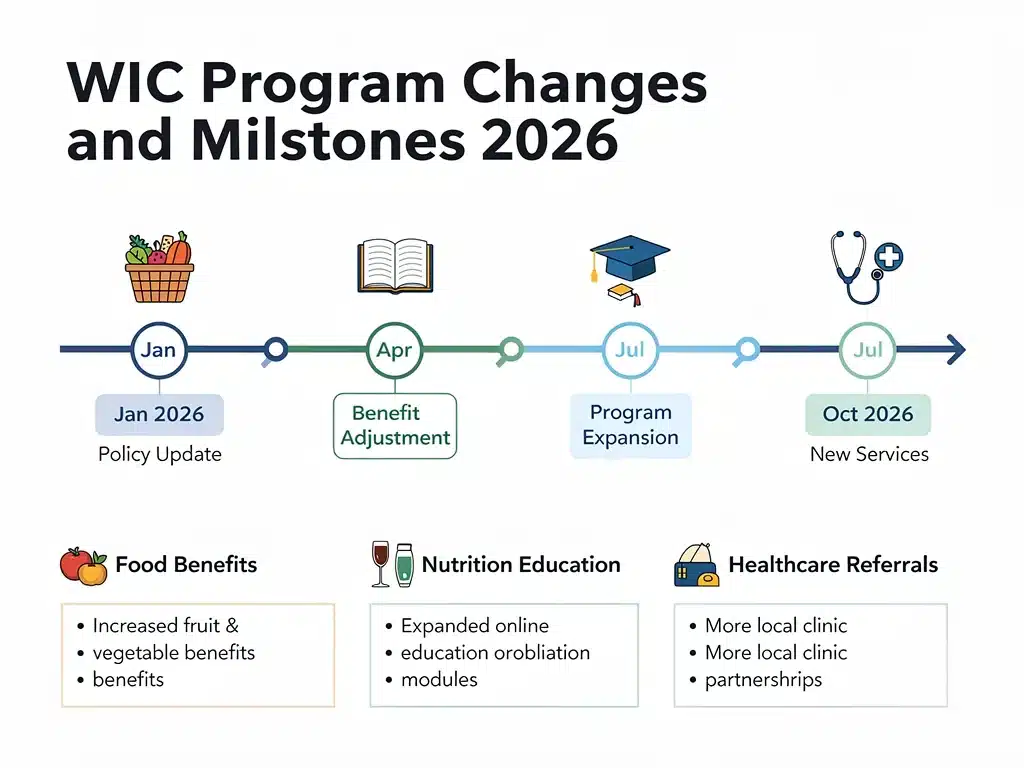
The original article described increased fruits, vegetables and whole grains as changes that participants should expect in the future, but USDA has already finalized those revisions.
The updated framework increases the emphasis on fruits and vegetables, expands whole-grain choices and creates additional substitution options within several food categories.
Families should therefore check their current state WIC food list rather than waiting for a future nationwide announcement, because implementation has already moved into the operational stage.
Fruit and Vegetable Benefits in Fiscal Year 2026
The WIC cash-value benefit, commonly called the CVB, provides a specific monthly amount that eligible participants can use for authorized fruits and vegetables.
USDA adjusts the baseline CVB amounts annually for inflation, meaning families should not rely indefinitely on benefit values published for an earlier fiscal year.
For fiscal year 2026, which runs from October 1, 2025 through September 30, 2026, USDA published updated monthly benefit amounts for participating categories.
Current FY 2026 Cash-Value Benefit Amounts
Children receiving applicable WIC food packages receive a monthly fruit and vegetable CVB of $26 during fiscal year 2026.
The USDA FY 2026 policy memorandum sets a $48 monthly amount for pregnant and applicable postpartum participants, while fully and mostly breastfeeding participants receive $52.
Because benefit categories depend on pregnancy, postpartum and breastfeeding status, participants should use the amount displayed by their WIC agency or electronic benefit system for their specific food package.
- Children: $26 monthly CVB.
- Pregnant and applicable postpartum participants: $48 monthly CVB under the FY 2026 policy memorandum.
- Fully and mostly breastfeeding participants: $52 monthly CVB.
Food Choices Are Broader Under the Revised Packages
The 2024 final rule expanded several areas of the WIC food packages to provide participants with more variety while maintaining federal nutritional standards.
State agencies must authorize fresh fruits and vegetables and are also required to authorize at least one additional form, such as frozen, canned or dried options.
Fresh herbs can also qualify under applicable fruit and vegetable rules, giving participants more flexibility than under the previous framework.
Whole Grains and Milk Substitutions Have More Flexibility
The revised food packages broaden whole-grain options and allow state agencies to authorize products such as quinoa, wild rice, blue cornmeal and teff when they meet program requirements.
Participants may also have expanded milk-substitution choices, including greater yogurt substitution allowances and qualifying plant-based alternatives where authorized by the state agency.
Exact brands and products remain state-specific, so a product that qualifies in one WIC jurisdiction should not automatically be assumed to appear on every state’s approved food list.
One Yogurt Requirement Was Delayed in 2026
Not every provision of the food-package revisions followed the same implementation schedule, and one notable technical requirement changed again during 2026.
The 2024 rule had established a future minimum vitamin D requirement for yogurt products authorized by WIC, with implementation originally scheduled for April 2027.
A June 2026 technical correction extended that specific deadline by another 36 months, moving it to April 19, 2030.
The Delay Does Not Undo the Broader WIC Food Changes
The yogurt vitamin D delay applies to a specific product specification and does not cancel the broader revisions to fruits, vegetables, grains, milk substitutions or other food-package provisions.
USDA explained that extending the deadline could prevent disruptions when state agencies and manufacturers are not yet able to meet the yogurt specification without limiting available products.
Families therefore do not need to interpret the technical correction as a general postponement of the 2026 WIC food-package changes.
WIC Income Guidelines Changed on July 1, 2026
WIC Program income guidelines are updated periodically and must be considered together with the program’s other eligibility requirements.
USDA published new 2026–2027 income guidelines effective July 1, 2026 and applicable through June 30, 2027.
The maximum federal income standard generally corresponds to 185% of the federal poverty guidelines, although state agencies administer eligibility under applicable WIC regulations.
Income Limits Depend on Household Size and Location
For the 48 contiguous states, District of Columbia, Guam and certain territories, the 2026–2027 annual maximum at 185% of the poverty guideline is $29,526 for a household of one.
The comparable annual maximum is $40,034 for a household of two and $50,542 for a household of three, with the threshold increasing as household size rises.
Alaska and Hawaii use different poverty guidelines, so applicants should not use figures from another jurisdiction to decide whether they qualify.
- Household of 1: up to $29,526 annually under the maximum federal guideline for applicable jurisdictions.
- Household of 2: up to $40,034 annually.
- Household of 3: up to $50,542 annually.
Income Alone Does Not Determine WIC Eligibility
Meeting an income threshold does not by itself establish WIC eligibility because applicants must satisfy additional program requirements.
Eligibility includes belonging to an eligible category, meeting residency requirements and being determined to have a nutritional risk through the WIC certification process.
Some applicants may also be considered income-eligible through participation in certain other public-benefit programs, depending on applicable categorical eligibility rules.
Who WIC Is Designed to Serve
WIC Program serves eligible pregnant participants, breastfeeding participants, postpartum participants, infants and children who have not yet reached their fifth birthday.
The length and type of benefits differ by participant category, meaning pregnancy, breastfeeding and postpartum status can affect both eligibility duration and food-package composition.
Families should contact a local WIC agency rather than assuming that receiving another government benefit automatically establishes every required element of WIC eligibility.
What Expecting Mothers Receive Through WIC
WIC Program provides more than food benefits because eligible pregnant participants can also receive nutrition education, breastfeeding information and referrals to healthcare or community resources.
The exact food package varies according to participant category and nutritional assessment rather than being one identical set of foods issued to every expecting mother.
The program is supplemental, meaning it is intended to support dietary needs rather than provide every food or nutrient required during pregnancy.
Breastfeeding Support Remains Part of the Program
WIC Program continues to provide breastfeeding education and support through state and local programs, including counseling and other services designed around individual feeding goals.
Food packages also differ for participants who are fully breastfeeding, mostly breastfeeding or using other infant-feeding arrangements.
The appropriate feeding approach can depend on individual circumstances, so WIC support should complement guidance from qualified healthcare professionals rather than replace individualized medical care.
What the Updates Mean for Infants and Young Children
WIC Program food packages for infants and young children are structured according to age and nutritional needs, meaning benefits change as a child develops.
Depending on eligibility and age, benefits may include infant formula, infant cereal, baby foods, milk, eggs, grains, legumes, peanut butter and fruits and vegetables.
Parents should rely on their current benefit list because the authorized quantities and substitutions differ between infants, one-year-old children and children ages two through four.
WIC Also Connects Families With Other Services
WIC Program staff perform nutrition assessments and can provide referrals when a family may benefit from healthcare, social services or additional community resources.
These referrals are an important part of the program, but WIC itself should not be described as providing comprehensive medical or developmental diagnosis.
Parents concerned about a child’s growth or development should continue using pediatric healthcare services while using WIC for the nutrition and referral support available through the program.
Applications and Appointments Are Becoming More Digital
USDA’s WIC modernization efforts have encouraged state agencies to simplify applications and reduce unnecessary administrative burdens through online and remote tools.
USDA now provides a model online application framework, and applicants in participating jurisdictions may be able to begin the process online before completing eligibility requirements with a WIC Program agency.
The exact process is not uniform nationwide, so families should use their state or local WIC website to determine whether an online application, telephone intake or in-person visit is required.
Virtual Appointments Remain Available in Many Jurisdictions
Modernization waivers allowed many state agencies to conduct certification or recertification appointments without requiring every participant to appear physically at a clinic.
Most of these time-limited modernization waivers are scheduled to remain effective through September 30, 2026 or until USDA completes applicable evaluation efforts, although some may expire earlier.
This means virtual options remain important in 2026, but families should not assume every local clinic follows the same remote-service policy.
Electronic Benefits and Online Shopping Continue to Modernize
Electronic benefit transfer systems are already central to WIC Program shopping in the United States, so 2026 should not be described as the beginning of EBT adoption.
The current modernization effort focuses more on improving electronic systems, remote benefit issuance and the ability of selected jurisdictions to support online shopping or mobile-payment projects.
State implementation varies because WIC agencies use different management information systems, EBT processors and retailer networks.
Online WIC Shopping Is Not Identical Everywhere
USDA modernization projects have tested or implemented online shopping functionality in participating state agencies rather than creating one nationwide online WIC Program marketplace.
Whether a family can order WIC-authorized food online depends on its state program, participating retailers, electronic benefit technology and current local rollout.
Participants should therefore use their state WIC app or agency resources to verify approved stores and shopping options before attempting an online transaction.
The 2025–2030 Dietary Guidelines Add New Context
The Dietary Guidelines for Americans, 2025–2030 became the current federal dietary guidance after their release in January 2026.
The guidelines emphasize whole and nutrient-dense foods while limiting highly processed foods, added sugars and refined carbohydrates.
Because federal nutrition guidance helps shape policy and nutrition education, WIC Program agencies may increasingly incorporate the current guidelines into educational resources and program administration.
New Dietary Guidance Does Not Automatically Rewrite Every Benefit
The release of new Dietary Guidelines does not by itself replace the WIC Program food-package regulations adopted through the formal rulemaking process.
USDA can use the new guidance in education, technical assistance and future policy development while existing WIC regulations continue to govern authorized food packages.
Families should therefore distinguish between general federal dietary recommendations and the specific foods and quantities listed in their WIC benefits.
What Families Should Do in the Second Half of 2026
Families already participating in WIC Program should review their current benefit information rather than relying on older articles describing 2026 changes as future proposals.
Applicants should use the income guidelines currently effective from July 1, 2026 through June 30, 2027 and contact their local WIC agency to complete the full eligibility determination.
Participants should also verify whether their state offers remote appointments, online application tools, digital shopping resources or additional substitutions under the revised food packages.
Keep Information With Your WIC Agency Current
Accurate contact information can help families receive appointment reminders, certification notices and information about benefit or shopping changes.
Participants should also report relevant household or participant changes when required by their agency rather than waiting until benefits are interrupted.
Because state agencies administer WIC Program locally, official state and clinic communications are generally more useful for individual benefit questions than national summaries alone.
Federal Rules and State Administration Work Together
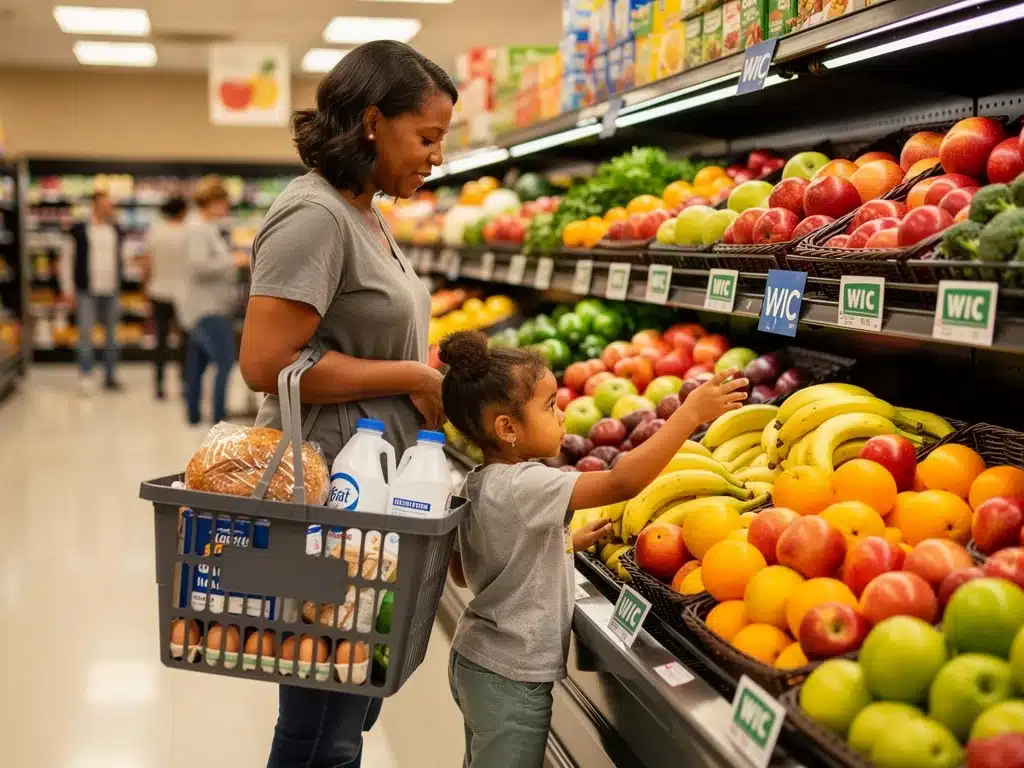
USDA establishes the federal framework for WIC Program, including major eligibility, food-package and program-administration requirements.
State agencies and Indian Tribal Organizations then operate the program locally, authorize retailers, establish approved product lists and manage participant services under those federal requirements.
This structure explains why broad national changes can produce slightly different shopping lists, apps, appointment systems and implementation details across jurisdictions.
Local WIC Agencies Remain the Best Source for Individual Cases
A national article can explain federal standards, but it cannot determine whether one individual qualifies or which exact products appear on a local approved-food list.
Local WIC Program staff can evaluate household information, confirm nutritional-risk requirements and explain the benefits assigned to an eligible participant.
Families can also use broader 2026 federal benefits updates for general context while relying on official WIC resources for program-specific decisions.
| Key Point | 2026 Status |
|---|---|
| Food Package Changes | Most major provisions from the 2024 final rule reached their general implementation deadline in April 2026. |
| Fruit & Vegetable CVB | FY 2026 amounts include $26 for children, $48 for applicable pregnant/postpartum participants and $52 for fully or mostly breastfeeding participants. |
| Income Guidelines | New 2026–2027 income guidelines became effective July 1, 2026. |
| Remote Services | Many modernization waivers remain available through September 30, 2026, though implementation varies by agency. |
| Yogurt Requirement | The specific vitamin D implementation deadline for qualifying yogurt was extended to April 19, 2030. |
Frequently Asked Questions About WIC Program Updates 2026
Mostly no. The major food-package revisions were finalized in 2024, and most provisions reached their general implementation deadline in April 2026. Some individual requirements have separate timelines.
USDA’s FY 2026 policy sets monthly CVB amounts of $26 for children, $48 for applicable pregnant and postpartum participants, and $52 for fully or mostly breastfeeding participants.
USDA updated the income guidelines effective July 1, 2026. The program still considers category, residency, income and nutritional risk when determining eligibility.
Many agencies allow applicants to begin the process online or by phone, but the procedure varies by state or tribal WIC agency. Contact the local agency to confirm how certification is completed.
They remain available in many jurisdictions. Most applicable modernization waivers are scheduled through September 30, 2026 or the end of USDA evaluation efforts, but local policies can differ.
What WIC Families Need to Know Now
WIC Program Updates 2026 are now primarily about using the revised food packages, understanding the new income guidelines and navigating state-level modernization rather than waiting for a future nationwide rollout.
The most relevant current changes include inflation-adjusted fruit and vegetable benefits, broader food-package flexibility, updated 2026–2027 income standards and continued use of remote and digital WIC services in many jurisdictions.
Families should use official USDA information for national rules and their state or local WIC Program provider or equivalent local agency for individual eligibility, approved foods, appointments and benefit questions.