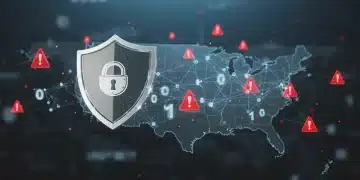
Nation-State Cyber Threats: Protecting US Data Through 2026

Advertisements
Latest developments on Nation-State Cyber show a sharp rise in sophisticated attacks targeting critical infrastructure, financial systems, and private data. Officials report increased activity from state-backed groups using AI-enhanced phishing, ransomware, and supply chain exploits.
Recent updates highlight two essential protection steps: strengthening identity security (multi-factor authentication and zero-trust frameworks) and enhancing real-time threat detection with advanced monitoring systems. Verified sources emphasize that organizations adopting these measures are significantly reducing breach risks and response times.
Looking ahead, stakeholders should monitor federal cybersecurity mandates, emerging AI-driven attack methods, and public-private collaboration efforts. Key factors include compliance with evolving regulations, workforce cybersecurity training, and continuous system updates to stay ahead of rapidly evolving threats.
Understanding the Evolving Landscape of Nation-State Cyber Threats
The landscape of nation-state cyber threats is continuously evolving, marked by increasing sophistication and audacity. These state-backed groups possess vast resources and often operate with long-term strategic objectives, making them formidable adversaries in the digital domain.
Their targets range from government agencies and defense contractors to critical infrastructure providers and key industries, aiming to gain strategic advantage or cripple essential services. The methods employed are diverse, including advanced persistent threats (APTs), supply chain attacks, and sophisticated disinformation campaigns.
As technology advances, so do the tools and techniques used by these actors, requiring constant vigilance and innovation in cybersecurity defenses. The sheer scale and complexity of these operations demand a comprehensive understanding and a unified response from both public and private entities.
Key Characteristics of State-Sponsored Attacks
State-sponsored attacks are typically characterized by their persistence, targeted nature, and advanced capabilities. Unlike financially motivated cybercriminals, nation-state actors are often driven by geopolitical objectives, intelligence gathering, or economic espionage, leading to highly customized and stealthy campaigns.
These groups often conduct extensive reconnaissance, exploiting zero-day vulnerabilities and employing sophisticated malware designed to evade detection. Their operations can span months or even years, allowing them to establish deep footholds within target networks before launching their primary attacks.
- Sophisticated Tools: Utilizing custom malware, zero-day exploits, and advanced evasion techniques.
- Strategic Objectives: Focused on intelligence gathering, economic espionage, and critical infrastructure disruption.
- Long-Term Persistence: Maintaining access to compromised systems for extended periods.
- Resource-Rich Operations: Backed by significant national resources, enabling large-scale, complex attacks.
The motivation behind these attacks is almost always tied to national interests, whether it’s gaining military intelligence, stealing proprietary technology, or destabilizing an opponent’s economy. This strategic imperative often means they are willing to invest substantial time and resources into a single campaign.
The Escalation of Cyber Espionage and Data Theft in the U.S.

Cyber espionage and data theft represent a significant component of nation-state cyber threats against the U.S., with adversaries constantly seeking to exfiltrate sensitive information. This includes classified government documents, corporate trade secrets, and personal data of high-value targets, all of which can be leveraged for strategic advantage.
The impact of such breaches extends beyond immediate financial losses, often leading to long-term economic disadvantages, erosion of national security, and loss of public trust. The sheer volume and value of data held within U.S. networks make it a prime target for these illicit activities.
Recent incidents have highlighted the pervasive nature of these threats, demonstrating how easily state actors can penetrate even well-defended systems. The continuous threat of data compromise necessitates a robust and adaptive defense strategy across all sectors.
Impact on Critical Infrastructure and National Security
Critical infrastructure, including energy grids, water systems, and financial networks, remains a primary target for nation-state cyber threats. Disrupting these systems can have catastrophic real-world consequences, ranging from widespread power outages to economic collapse, directly impacting national security.
Attacks on these vital sectors are often designed to test defenses, gather intelligence, or lay the groundwork for future, more disruptive operations. The interconnectedness of modern infrastructure means a single successful breach can have cascading effects across multiple systems and industries.
- Energy Grid Vulnerabilities: Potential for widespread blackouts and service disruptions.
- Financial System Integrity: Risks of economic destabilization through data manipulation or theft.
- Supply Chain Compromise: Exploitation of weak links to gain access to broader networks.
- Disinformation Campaigns: Manipulation of public perception and trust through targeted cyber operations.
Protecting these assets requires a multi-layered approach, combining advanced technical defenses with stringent operational security protocols. Collaboration between government agencies and private sector operators is crucial to building resilient defenses against these persistent and evolving threats.
Two Essential Steps to Mitigate Nation-State Cyber Threats Through 2026
Addressing the escalating Nation-State Cyber Threats requires a strategic and proactive approach, with two essential steps forming the bedrock of effective defense. These steps focus on strengthening foundational cybersecurity practices and fostering enhanced intelligence sharing and collaboration across sectors.
Implementing these measures will not only harden defenses against current threats but also build resilience against future, more sophisticated attacks. The goal is to create an environment where adversaries face significant hurdles in their attempts to compromise U.S. data and systems.
These essential steps are not quick fixes but rather ongoing commitments that demand continuous investment, adaptation, and a culture of security awareness. Their successful implementation will be pivotal in safeguarding national interests through 2026 and beyond.
Step 1: Fortifying Foundational Cybersecurity Practices
The first essential step involves rigorously fortifying foundational cybersecurity practices across all organizations, from government entities to small businesses. This means going beyond basic compliance to implement a comprehensive security framework that addresses known vulnerabilities and anticipates emerging threats.
This includes robust access controls, continuous vulnerability management, regular security audits, and widespread adoption of multi-factor authentication (MFA). It also entails investing in advanced endpoint detection and response (EDR) solutions and security information and event management (SIEM) systems to detect and respond to threats rapidly.
Effective employee training and awareness programs are also critical to this step, as human error often remains a significant vulnerability. A strong security posture starts with educated users and a commitment to best practices at every level of an organization.
- Implement Zero Trust Architecture: Verifying every user and device, regardless of location, before granting access.
- Patch Management and Vulnerability Scans: Regularly updating systems and identifying weaknesses proactively.
- Strong Encryption Protocols: Protecting data at rest and in transit from unauthorized access.
- Incident Response Planning: Developing and regularly testing comprehensive plans for cyber attack mitigation.
By focusing on these foundational elements, organizations can significantly reduce their attack surface and make it far more difficult for nation-state actors to gain initial access or maintain persistence within their networks. This proactive defense is critical for protecting sensitive data against sophisticated threats.
Enhancing Intelligence Sharing and Cross-Sector Collaboration
The second essential step in combating nation-state cyber threats is to significantly enhance intelligence sharing and foster robust cross-sector collaboration. No single entity, whether government or private, can effectively combat these sophisticated adversaries in isolation.
Real-time sharing of threat intelligence, indicators of compromise (IOCs), and attack methodologies allows for a collective defense that adapts rapidly to new threats. This collaborative approach creates a network effect, where insights from one organization can protect many others.
Formal and informal partnerships between government agencies, critical infrastructure operators, cybersecurity firms, and academic institutions are vital. These collaborations enable the development of shared defense strategies, joint training exercises, and a unified front against common adversaries.
The Role of Public-Private Partnerships in Defense
Public-private partnerships are indispensable in the fight against nation-state cyber threats, bridging the gap between government intelligence capabilities and private sector innovation. These collaborations facilitate the exchange of classified threat intelligence with commercial entities, enabling them to better protect their systems and data.
Government agencies can provide insights into the motives and capabilities of state-sponsored actors, while the private sector offers cutting-edge technological solutions and a deep understanding of specific industry vulnerabilities. This synergy creates a more resilient national cybersecurity posture.
Initiatives like the Cybersecurity and Infrastructure Security Agency (CISA) and industry-specific Information Sharing and Analysis Centers (ISACs) play a crucial role in operationalizing this collaboration. Their platforms allow for the rapid dissemination of warnings and best practices, strengthening collective defenses against nation-state cyber threats.
The Imperative of Continuous Monitoring and Adaptation
Beyond implementing initial countermeasures, the sustained defense against nation-state cyber threats hinges on continuous monitoring and a commitment to adaptive security strategies. The dynamic nature of these adversaries means that static defenses are quickly rendered obsolete, necessitating constant evolution.
Organizations must establish robust security operations centers (SOCs) capable of 24/7 threat detection, analysis, and response. This involves leveraging advanced analytics, artificial intelligence, and machine learning to identify anomalous behavior and potential intrusions in real-time.
Regular penetration testing, red teaming exercises, and security posture assessments are also crucial to identify new vulnerabilities and validate the effectiveness of existing controls. This iterative process of testing, learning, and adapting is fundamental to staying ahead of sophisticated nation-state actors.
Building Cyber Resilience for the Future
Building cyber resilience involves not just preventing attacks but also ensuring the ability to rapidly recover and maintain essential functions even when a breach occurs. This forward-looking approach acknowledges that absolute prevention is often unattainable against highly resourced nation-state cyber threats.
Resilience strategies include robust backup and recovery plans, redundant systems, and clear communication protocols for crisis management. The focus shifts from merely stopping an attack to minimizing its impact and quickly restoring normal operations, limiting the adversary’s strategic gains.
Investing in technologies that offer automated remediation and self-healing capabilities can significantly enhance an organization’s ability to withstand and recover from cyber incidents. This holistic approach ensures that disruptions are temporary and operational continuity is maintained.
Addressing Supply Chain Vulnerabilities
Supply chain vulnerabilities represent a growing attack vector for nation-state cyber threats, as adversaries exploit weaknesses in third-party vendors and software to gain access to primary targets. A single compromised component or service can open the door to an entire network, making supply chain security a critical concern.
Organizations must conduct thorough due diligence on all their suppliers and partners, ensuring that their cybersecurity standards align with internal requirements. This includes assessing the security of hardware, software, and services integrated into their operations.
Implementing strong contractual agreements that mandate specific security controls and audit rights for vendors is also essential. Continuous monitoring of the supply chain for suspicious activity and potential compromises is vital to mitigate these indirect but potent threats.
The Challenge of Insider Threats
While external nation-state cyber threats dominate headlines, insider threats, whether malicious or unintentional, pose an equally significant risk. State-sponsored actors often attempt to recruit insiders or exploit disgruntled employees to gain access to sensitive systems and data.
Robust internal security policies, including strict access controls based on the principle of least privilege, are crucial for mitigating insider risks. Regular security awareness training can help employees identify social engineering attempts and recognize unusual activity.
- Behavioral Analytics: Monitoring user activity for deviations from normal patterns.
- Data Loss Prevention (DLP): Preventing sensitive information from leaving the organization’s control.
- Clear Exit Procedures: Ensuring all access is revoked promptly for departing employees.
- Background Checks: Conducting thorough vetting for employees with access to critical systems.
A comprehensive approach to cybersecurity must therefore encompass both external defenses against nation-state cyber threats and internal controls to manage the risks posed by insiders. This dual focus creates a more secure environment for protecting U.S. data.
International Cooperation and Policy Frameworks

Effective defense against nation-state cyber threats extends beyond national borders, necessitating robust international cooperation and the development of clear policy frameworks. Collaborative efforts with allied nations are crucial for sharing intelligence, coordinating responses, and establishing norms of responsible state behavior in cyberspace.
Diplomatic engagement aims to deter malicious cyber activities and hold state sponsors accountable for their actions. This involves working towards international agreements and treaties that define acceptable conduct and impose consequences for violations, fostering a more stable and secure digital environment.
Domestically, clear policy frameworks are essential to guide government actions, define roles and responsibilities, and ensure legal authorities are in place to respond effectively to cyber incidents. These policies must balance security imperatives with privacy concerns and civil liberties.
Legal and Regulatory Responses to Cyber Aggression
Legal and regulatory responses play a vital role in countering nation-state cyber threats, providing frameworks for prosecution, sanctions, and attribution. The ability to legally attribute cyber attacks to specific state actors is a complex but crucial step in deterring future aggression and imposing consequences.
Governments are increasingly using sanctions and other diplomatic tools against countries found to be sponsoring malicious cyber activities. These measures aim to impose economic and political costs on perpetrators, encouraging a shift away from aggressive cyber behavior.
Furthermore, domestic legislation is continually being updated to empower law enforcement and intelligence agencies to investigate and disrupt cyber threats effectively. This includes laws related to data protection, critical infrastructure security, and cybercrime, all designed to strengthen the U.S.’s legal posture against nation-state cyber threats.
| Key Point | Brief Description |
|---|---|
| Fortify Core Security | Implement robust access controls, continuous vulnerability management, and MFA to counter nation-state cyber threats. |
| Enhance Collaboration | Boost intelligence sharing and public-private partnerships to create a unified defense against sophisticated attacks. |
| Continuous Adaptation | Maintain 24/7 monitoring and adaptive strategies to stay ahead of evolving nation-state cyber threats. |
| Supply Chain Security | Rigorously vet vendors and monitor third-party risks to prevent nation-state exploitation. |
Frequently Asked Questions About Nation-State Cyber Threats
Nation-state cyber threats refer to malicious cyber activities sponsored or conducted by national governments. These operations often target critical infrastructure, government agencies, and key industries to achieve strategic objectives like espionage, data theft, or disruption. They typically involve highly sophisticated tools and significant resources.
Nation-states target U.S. data for various strategic reasons, including gaining economic advantage through intellectual property theft, acquiring military intelligence, influencing political processes, and potentially disrupting critical services. The U.S. holds vast amounts of valuable data across its government and private sectors, making it a prime target.
The two essential steps are fortifying foundational cybersecurity practices (e.g., zero trust, MFA, regular patching) and enhancing intelligence sharing and cross-sector collaboration. These measures create a robust defense by strengthening internal security and leveraging collective knowledge against sophisticated nation-state cyber threats.
Intelligence sharing allows organizations to receive real-time threat indicators and attack methodologies from government agencies and industry peers. This collective knowledge enables faster detection, more effective response, and proactive defense strategies, preventing widespread impact from nation-state cyber threats across multiple entities.
Individuals play a crucial role by practicing strong cyber hygiene, such as using unique, complex passwords, enabling multi-factor authentication, and being vigilant against phishing attempts. Their awareness and adherence to security protocols reduce entry points for nation-state actors, complementing organizational defenses against these pervasive threats.
Looking Ahead: Sustained Vigilance and Collective Action
The persistent nature of nation-state cyber threats demands sustained vigilance and a concerted, collective action from all stakeholders in the United States. The insights gained from recent incidents underscore the need for continuous adaptation of defense strategies, as adversaries consistently refine their tactics and tools.
This ongoing arms race in cyberspace requires both technological innovation and a deep understanding of geopolitical motivations to effectively protect U.S. data and infrastructure through 2026.
Future efforts must focus on strengthening international partnerships to establish clear norms of behavior in cyberspace and hold malicious actors accountable.
Domestically, the emphasis will remain on fostering a culture of cybersecurity awareness and ensuring that both public and private sectors are equipped with the resources and expertise to counter sophisticated state-sponsored attacks.
The threat of nation-state cyber threats is not diminishing, making proactive engagement paramount.