2025 US Federal Budget: Key Spending Shifts Affecting Americans
Advertisements
The 2025 US Federal Budget introduces significant spending shifts in healthcare, national defense, and climate initiatives, directly influencing economic stability and public services for Americans.
Understanding the 2025 US Federal Budget is crucial for every American, as its proposed spending shifts will directly impact various aspects of daily life. From healthcare access to economic stability, these budgetary decisions shape the nation’s priorities and resource allocation. Let’s explore the three key spending shifts that stand to affect you this year.
Decoding the 2025 US Federal Budget: An Overview
The annual federal budget is more than just a collection of numbers; it’s a blueprint for the nation’s future, reflecting the administration’s priorities and policy objectives. The 2025 US Federal Budget, recently unveiled, outlines how taxpayer dollars will be spent across a myriad of government functions, from defense to social services. These allocations are not static; they represent a dynamic response to current economic conditions, geopolitical challenges, and societal needs.
Each year, the budget proposal sparks intense debate among policymakers, economists, and the public. It serves as a comprehensive document detailing projected revenues and expenditures, influencing everything from interest rates to job creation. For citizens, understanding these broad strokes is the first step toward grasping the specific impacts on their lives and communities.
The Budgetary Process and Its Significance
The formulation of the federal budget is a complex, multi-stage process involving numerous federal agencies, the Office of Management and Budget (OMB), and ultimately, Congress. It begins with agencies submitting their requests, which are then compiled and refined by the OMB into the President’s budget proposal. This proposal then goes to Congress, where it undergoes thorough review, debate, and amendment before being passed into law.
- Executive Branch Proposal: The President’s budget outlines the administration’s fiscal plan and policy goals.
- Congressional Review: House and Senate committees analyze and modify the proposal.
- Appropriations: Specific funding bills are passed to allocate money to federal agencies.
- Impact on States: Federal funding often dictates state-level programs and services.
The significance of this process cannot be overstated. It determines the scope and scale of government services, influences economic growth, and addresses national challenges. The 2025 budget, in particular, comes at a time of evolving global dynamics and domestic pressures, making its provisions especially salient for American households and businesses.
In essence, the 2025 US Federal Budget is a strategic document that sets the financial course for the nation for the upcoming fiscal year. Its intricate details and overarching themes provide valuable insights into the direction the country is headed, making it essential for informed civic engagement and personal financial planning.
Key Spending Shift 1: Healthcare and Social Security Adjustments
The 2025 US Federal Budget proposes significant adjustments to healthcare and social security, two pillars of American welfare. These changes aim to address long-term fiscal sustainability while attempting to maintain critical services for an aging population. The proposed shifts could have far-reaching implications for millions of beneficiaries and healthcare providers nationwide.
Discussions around these areas are often contentious, as they involve deeply personal aspects of life and financial security. The administration’s proposals seek to balance the rising costs of medical care and the increasing number of retirees with the need to control federal debt. Understanding the specifics of these adjustments is vital for anyone relying on or contributing to these systems.
Proposed Changes to Medicare and Medicaid
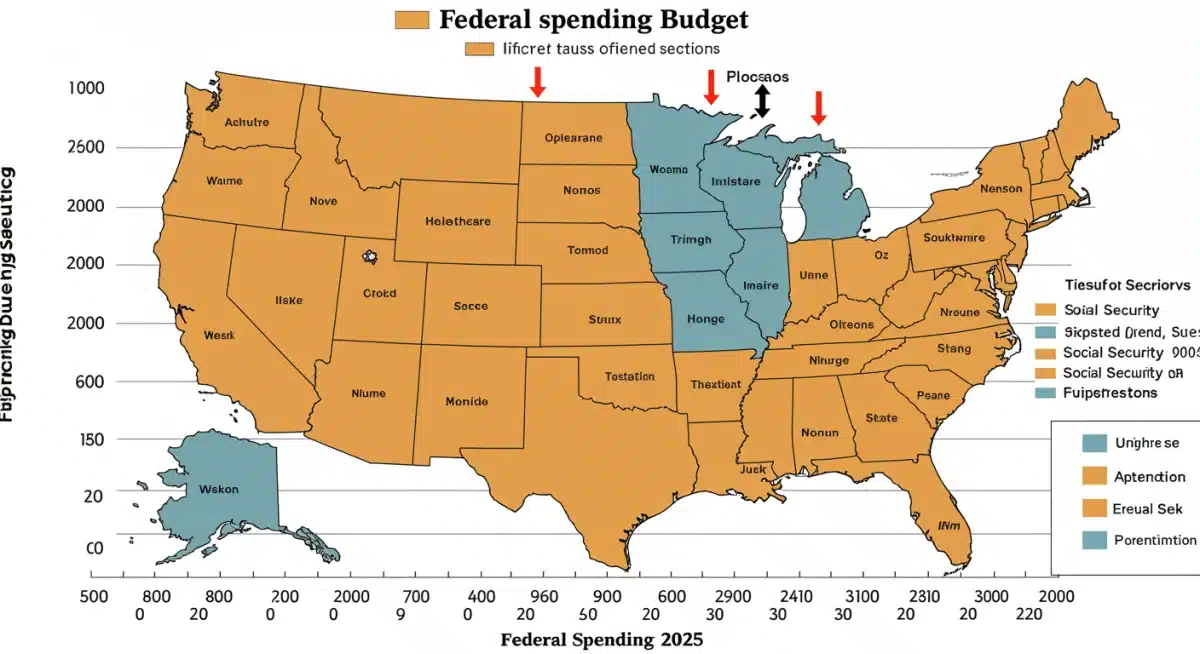
Medicare and Medicaid, two of the largest federal programs, are slated for notable modifications. The 2025 budget emphasizes cost-saving measures and efficiency improvements within these systems. This includes potential reforms to prescription drug pricing, efforts to combat healthcare fraud, and initiatives to promote value-based care models over traditional fee-for-service structures.
- Prescription Drug Reform: Continued focus on negotiating lower drug prices for seniors.
- Value-Based Care: Incentivizing healthcare providers for better patient outcomes, not just services rendered.
- Program Integrity: Bolstering efforts to reduce waste, fraud, and abuse within both programs.
- Expanded Access: Potential for targeted expansions in certain underserved areas or populations.
These adjustments are designed not only to rein in expenditures but also to improve the quality and accessibility of care. However, the implementation of such broad changes often comes with challenges, including potential impacts on provider reimbursement and beneficiary choices. The goal is to ensure the long-term viability of these essential programs without compromising the health and well-being of Americans.
Social Security Funding and Future Outlook
Social Security, which provides vital income to retirees, survivors, and disabled individuals, faces ongoing solvency concerns. The 2025 budget acknowledges these challenges and may propose measures to strengthen its financial footing. While radical overhauls are often politically difficult, incremental adjustments or new revenue streams are frequently considered.
These discussions typically involve potential changes to eligibility requirements, benefit calculations, or the taxation of Social Security benefits. Any modifications in this area could significantly alter the retirement planning landscape for current and future generations. The administration’s approach seeks to ensure that Social Security remains a reliable safety net for those who depend on it, while also adapting to demographic shifts and economic realities.
The proposed healthcare and Social Security adjustments in the 2025 US Federal Budget represent a delicate balancing act. Policymakers aim to secure the future of these crucial programs while managing federal finances responsibly. Americans should pay close attention to these developments, as they will undoubtedly influence their access to care and financial security in the years to come.
Key Spending Shift 2: National Defense and Security Priorities
The 2025 US Federal Budget reflects a clear prioritization of national defense and security, responding to an evolving global landscape marked by geopolitical tensions and emerging threats. This spending shift encompasses increased investments in military modernization, cybersecurity, and strategic alliances, aiming to maintain America’s competitive edge and protect its interests both domestically and abroad.
Defense spending is consistently one of the largest components of the federal budget, and changes in this area have significant economic implications, influencing industries from aerospace to technology. The administration’s proposed allocations highlight a commitment to strengthening military capabilities and addressing complex security challenges in a rapidly changing world.
Military Modernization and Technological Advancement
A substantial portion of the defense budget is allocated to modernizing the military’s arsenal and investing in cutting-edge technologies. This includes funding for advanced aircraft, naval vessels, and ground systems, as well as research and development in areas like artificial intelligence, hypersonic weapons, and quantum computing. The goal is to ensure that the US military remains at the forefront of technological innovation.
- Next-Generation Weapon Systems: Developing and acquiring advanced hardware for all branches of the military.
- Cybersecurity Enhancements: Strengthening defenses against digital threats to critical infrastructure and government systems.
- Space Capabilities: Investing in satellite technology and space-based defense assets.
- Personnel Readiness: Funding for training, recruitment, and support for military personnel and their families.
These investments are crucial for maintaining deterrence and projecting power globally. They also stimulate innovation within the defense industry, creating jobs and fostering technological advancements that can have spillover benefits for the civilian sector. The focus on modernization is a direct response to the sophisticated capabilities being developed by peer competitors.
Cybersecurity and Global Threat Response
Beyond traditional military expenditures, the 2025 budget places a heightened emphasis on cybersecurity and the ability to respond to a wide array of global threats, including terrorism, cyber warfare, and disinformation campaigns. This involves increased funding for intelligence agencies, specialized cyber defense units, and international partnerships aimed at countering malicious actors.
The interconnected nature of modern society means that cyber threats can have far-reaching consequences, impacting everything from financial markets to energy grids. Therefore, robust investments in cybersecurity are not just a matter of national security but also economic stability. The budget also supports diplomatic efforts and humanitarian aid, recognizing that comprehensive security involves more than just military might.
The shift in national defense and security priorities within the 2025 US Federal Budget underscores a proactive approach to protecting American interests in an increasingly complex global environment. These investments are designed to ensure the nation’s safety and influence, while also driving innovation within key technological sectors.
Key Spending Shift 3: Climate Initiatives and Green Energy Investment
In a significant shift towards sustainability, the 2025 US Federal Budget allocates substantial resources to climate initiatives and green energy investments. This reflects a growing commitment to addressing climate change, promoting renewable energy sources, and fostering a green economy. These investments are poised to impact various sectors, from manufacturing and infrastructure to scientific research and job creation.
The administration’s focus on climate action is driven by a desire to mitigate environmental risks, enhance energy independence, and capitalize on the economic opportunities presented by the transition to a cleaner energy future. This shift represents a strategic investment in long-term environmental and economic resilience for the United States.
Accelerating Renewable Energy Adoption
A core component of the climate spending shift is the acceleration of renewable energy adoption. The budget proposes funding for incentives, research and development, and infrastructure projects aimed at expanding solar, wind, geothermal, and other clean energy technologies. This includes enhancing grid reliability and developing advanced energy storage solutions.
- Tax Credits and Incentives: Encouraging residential and commercial adoption of renewable energy systems.
- Grid Modernization: Investing in smart grid technologies to integrate more renewable sources.
- Research and Development: Funding for breakthroughs in clean energy technologies and efficiency.
- Electric Vehicle Infrastructure: Expanding charging networks and promoting EV manufacturing.
These investments are designed to reduce reliance on fossil fuels, decrease greenhouse gas emissions, and create new jobs in the rapidly expanding green energy sector. The economic benefits include lower energy costs over time, increased energy security, and the potential for American leadership in global clean energy markets.
Climate Resilience and Conservation Efforts
Beyond promoting green energy, the 2025 budget also emphasizes climate resilience and conservation. This involves funding for projects that protect communities from the impacts of extreme weather events, restore natural ecosystems, and enhance biodiversity. Investments will be directed towards infrastructure upgrades that can withstand climate-related challenges, such as rising sea levels and more intense storms.
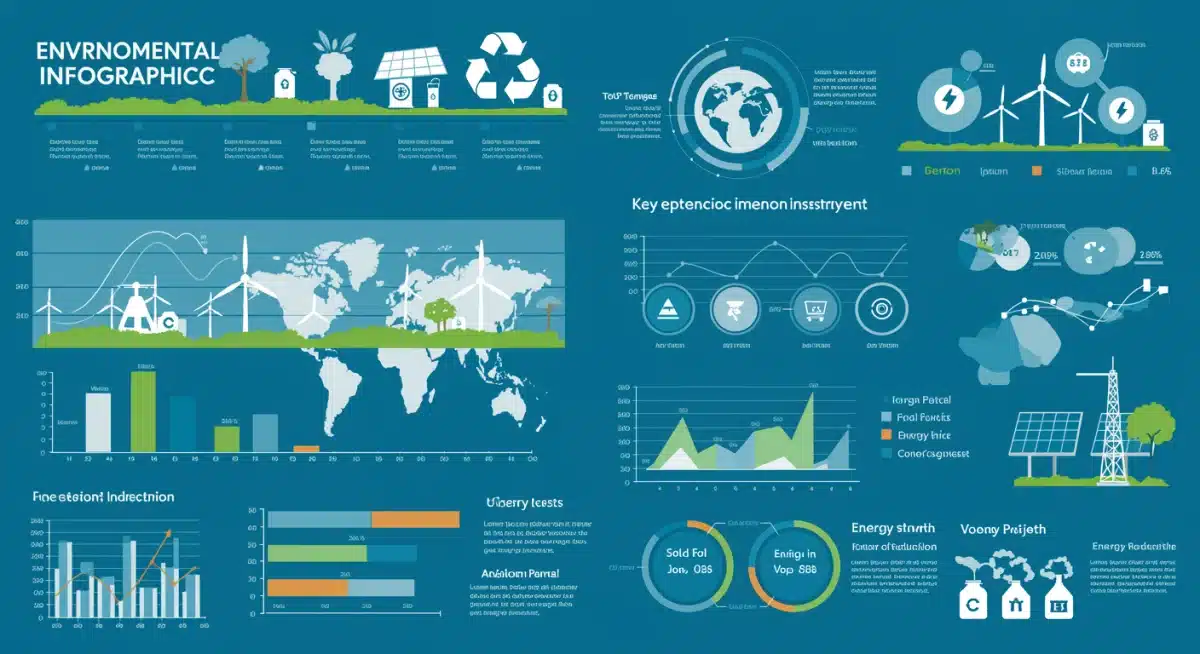
Specific allocations may include funding for coastal restoration, forest management to reduce wildfire risks, and improvements to water infrastructure. These efforts are critical for safeguarding public health, preserving natural resources, and ensuring the long-term sustainability of communities across the country. The focus on conservation also supports tourism and outdoor recreation industries.
The climate initiatives and green energy investments outlined in the 2025 US Federal Budget signify a profound commitment to a sustainable future. By channeling resources into renewable energy and resilience projects, the government aims to address environmental challenges while simultaneously fostering economic growth and innovation.
Economic Implications for American Households
The spending shifts outlined in the 2025 US Federal Budget will inevitably have a ripple effect on American households, influencing everything from personal finances to employment opportunities. Understanding these economic implications is key to navigating the changes and making informed decisions about one’s financial future. The budget’s impact extends beyond direct government services, touching various aspects of the economy.
From healthcare costs to job markets, the federal budget shapes the economic environment in which Americans live and work. While some impacts will be broad and national, others will be more localized, affecting specific industries or communities differently. It’s essential to consider both the intended and potential unintended consequences of these budgetary decisions.
Impact on Employment and Industry
The increased spending in areas like national defense and green energy is expected to create new job opportunities and stimulate growth in related industries. For instance, investments in renewable energy infrastructure could lead to a surge in demand for engineers, construction workers, and manufacturing personnel in the clean energy sector. Similarly, defense modernization can boost employment in aerospace, technology, and cybersecurity fields.
- Green Jobs Growth: Expansion in solar, wind, and electric vehicle manufacturing and installation.
- Defense Sector Employment: Increased demand for skilled labor in advanced manufacturing and R&D.
- Healthcare Workforce: Potential for shifts in demand for certain medical professionals due to program adjustments.
- Regional Economic Development: Specific regions may see economic boosts due to localized projects.
Conversely, industries that may see reduced federal support could experience slowdowns. However, the overall emphasis on innovation and strategic investment is generally seen as a driver for economic expansion. Americans in affected sectors may need to adapt to evolving job market demands by acquiring new skills or exploring emerging opportunities.
Cost of Living and Consumer Spending
The budget’s effects on the cost of living and consumer spending are multifaceted. Changes in healthcare policy, for example, could influence premiums, out-of-pocket expenses, and access to specific treatments. Efforts to lower prescription drug costs, if successful, could provide financial relief to many households. Similarly, investments in green energy could lead to lower utility bills in the long run, though initial transition costs might be a factor.
Federal spending also influences inflation, interest rates, and the broader economic climate. While the goal is often to promote stability and growth, the sheer scale of federal expenditures means that they can have a significant impact on purchasing power. Consumers should monitor these trends and adjust their financial planning accordingly, considering potential shifts in disposable income and essential expenses.
Ultimately, the economic implications of the 2025 US Federal Budget are complex and far-reaching. While some sectors and individuals may experience direct benefits, others might face adjustments. A proactive approach to understanding these changes will enable American households to better prepare for the financial landscape ahead.
Navigating the Changes: What Americans Can Do
With significant spending shifts proposed in the 2025 US Federal Budget, Americans might wonder how best to navigate these changes and mitigate potential impacts. Staying informed and proactive is crucial, as individual choices and community engagement can play a role in adapting to the evolving economic and social landscape. Understanding the budget’s nuances allows for better personal and collective decision-making.
From financial planning to civic participation, there are several avenues through which individuals can respond to and influence the outcomes of federal budgetary decisions. It’s not just about reacting to policies but also about contributing to the discourse and advocating for priorities that resonate with personal and community values.
Financial Planning and Adaptability
Given the potential shifts in areas like healthcare and social security, reviewing personal financial plans is a wise step. This might involve re-evaluating insurance coverage, retirement savings strategies, and investment portfolios. For example, if healthcare costs are projected to change, adjusting savings for medical expenses could be prudent. Similarly, understanding the long-term outlook for Social Security can inform retirement planning.
- Review Healthcare Coverage: Assess how budget changes might affect your insurance plans and out-of-pocket costs.
- Update Retirement Strategy: Consider the implications for Social Security and adjust savings goals if necessary.
- Explore Green Incentives: Look into potential tax credits or rebates for energy-efficient home improvements or EV purchases.
- Budget for Energy Costs: Prepare for potential fluctuations in energy prices due to green energy transitions.
Financial adaptability is key. This includes maintaining an emergency fund, diversifying investments, and seeking advice from financial professionals who can offer tailored guidance based on the latest budgetary information. Being prepared for various scenarios can help buffer against unexpected economic shifts.
Civic Engagement and Advocacy
Beyond personal financial adjustments, civic engagement offers a powerful way to respond to federal budget decisions. Americans can voice their opinions to elected officials, participate in public forums, and support advocacy groups that align with their interests. Whether it’s advocating for stronger social safety nets, increased environmental protection, or robust national defense, collective action can influence policy outcomes.
Staying informed about legislative debates and understanding how proposed budget items will affect local communities are also important. Engaging with local and national news sources, fact-checking information, and participating in democratic processes can ensure that diverse perspectives are considered in ongoing budgetary discussions. Public input is a vital component of a responsive government.
Navigating the changes introduced by the 2025 US Federal Budget requires a combination of personal preparedness and active civic participation. By staying informed, adapting financial strategies, and engaging with the political process, Americans can better shape their future in response to these significant spending shifts.
Long-Term Vision and Future Outlook
The 2025 US Federal Budget is not merely a one-year plan; it reflects a broader long-term vision for the nation’s future, encompassing economic growth, social welfare, and global leadership. The spending shifts discussed – in healthcare, defense, and climate – are strategic investments intended to yield benefits and address challenges over the coming decades. Understanding this long-term perspective is crucial for appreciating the full scope of the budget’s impact.
These budgetary decisions aim to position the United States for sustained prosperity, resilience, and security in an ever-changing world. While immediate effects are important, the strategic intent behind these allocations is to build foundational strengths that will serve future generations, shaping the trajectory of American society and its role on the global stage.
Sustainability and Intergenerational Equity
A significant aspect of the long-term vision embedded in the budget is the focus on sustainability and intergenerational equity. Decisions regarding Social Security and Medicare aim to ensure these programs remain viable for future retirees, preventing undue burden on younger generations. Similarly, investments in climate initiatives are designed to protect the environment and natural resources for the long term, mitigating risks for future inhabitants.
- Fiscal Responsibility: Efforts to manage national debt and ensure long-term economic stability.
- Environmental Stewardship: Protecting natural resources and ecosystems for future generations.
- Social Safety Net: Ensuring the continued strength of programs like Social Security and Medicare.
- Technological Leadership: Investing in R&D to maintain America’s competitive edge globally.
This forward-looking approach seeks to balance current needs with future requirements, acknowledging that today’s spending decisions will have lasting consequences. The goal is to avoid short-sighted policies that might provide immediate relief but create greater problems down the road, instead opting for solutions that foster enduring well-being.
Adapting to a Changing World
The 2025 budget also reflects an adaptation to a rapidly changing global landscape. Increased defense spending and cybersecurity investments are a direct response to evolving geopolitical realities and digital threats. Similarly, the emphasis on green energy aligns with global efforts to combat climate change and transition to a more sustainable global economy.
By strategically allocating resources, the budget aims to equip the nation with the tools and resilience needed to thrive in this dynamic environment. This includes fostering innovation, strengthening international partnerships, and promoting economic competitiveness. The long-term vision is one of a resilient, innovative, and secure America capable of meeting the challenges and seizing the opportunities of the 21st century.
In conclusion, the 2025 US Federal Budget is more than just an annual financial document; it is a statement of long-term intent. Its key spending shifts are designed to address immediate concerns while simultaneously building a foundation for a sustainable, secure, and prosperous future for all Americans, reflecting a strategic adaptation to both domestic and global shifts.
| Key Spending Area | Brief Impact on Americans |
|---|---|
| Healthcare & Social Security | Potential changes in medical costs, prescription drug prices, and retirement benefits. |
| National Defense & Security | Increased job opportunities in defense/tech sectors, enhanced cybersecurity protection. |
| Climate Initiatives & Green Energy | Growth in green jobs, potential for lower energy bills, improved environmental protections. |
| Economic Stability | Broader impacts on inflation, interest rates, and overall economic growth for households. |
Frequently Asked Questions About the 2025 US Federal Budget
The 2025 US Federal Budget aims to strengthen the economy, enhance national security, and address critical social needs. It prioritizes fiscal responsibility while investing in key areas like healthcare, defense modernization, and climate action to ensure long-term stability and prosperity for Americans.
Proposed healthcare changes in the 2025 budget, such as prescription drug price negotiations and value-based care models, could potentially lead to lower out-of-pocket costs for some Americans. However, individual impacts will vary based on specific insurance plans and healthcare needs.
Increased spending in national defense, cybersecurity, and green energy initiatives is expected to create new job opportunities in these sectors. This includes roles in manufacturing, technology, engineering, and infrastructure development, contributing to overall economic growth and employment.
The 2025 budget allocates significant funds to climate initiatives, including investments in renewable energy, electric vehicle infrastructure, and climate resilience projects. These efforts aim to reduce carbon emissions, promote clean energy adoption, and protect communities from environmental impacts.
Yes, Americans can influence the federal budget process through civic engagement. This includes contacting elected officials, participating in public hearings, joining advocacy groups, and staying informed about legislative debates. Your voice helps shape national priorities and resource allocation.
Conclusion
The 2025 US Federal Budget represents a pivotal moment for the nation, outlining strategic spending shifts that will undeniably shape the lives of Americans. From critical adjustments in healthcare and Social Security to significant investments in national defense and ambitious climate initiatives, these budgetary decisions reflect a comprehensive effort to address current challenges and prepare for future opportunities. By understanding these key shifts and their potential impacts, individuals can better plan their finances, engage with policy discussions, and contribute to the ongoing dialogue about the nation’s priorities. The budget is not just a financial document, but a roadmap for America’s path forward, demanding informed attention from all citizens.